Assam RS election exposes fragile Opposition
The election of two Rajya Sabha (RS) members from Assam on Friday resulted in the suspension of seven non-Congress legislators by their respective parties. It also saw the Congress attracting flak for luring Opposition MLAs with community-specific councils including one for Muslims displaced from Mymensingh in Bangladesh.
Virtually lost in the drama was the election outcome – victory for Congress nominees Nazneen Farooque and Sylvius Condpan.
The Upper House has a quota of seven members for Assam. The term of two of them – Anowara Taimur and Condpan – expired earlier this month necessitating Friday’s election.
The Congress and allies with 78 MLAs in the 126-member House had named All India Mahila Congress secretary Farooque as its first preference and Condpan as the second choice. Condpan’s re-nomination was to ensure local media baron Jayanta Barua, the independent consensus candidate of a combined Opposition, did not win.
The Opposition parties were confident of Barua’s victory, as their combined strength was 48, five more than the minimum required. Asom Gana Parishad led the Opposition with 24 MLAs, BJP and All India United Democratic Front (AIUDF) with 10 each, CPI (M) with two, CPI and Autonomous State Demand Committee (ASDC) one each and an Independent.
But the scenario changed by Thursday after Congress dangled community-specific councils for AGP, BJP, AIUDF and ASDC legislators besides allegedly buying them out. Assam Health Minister Himanta Biswa Sarma went on record about the creation of these development councils.
While the BJP’s renegades were promised councils for the backward Nath-Jogi and Bishnupriya Manipuri communities, another for Muslim settlers from Mymensingh was guaranteed for the AIUDF. If that were not enough, four BJP MLAs went ‘missing’ from Thursday night.,
On Friday, the day of polling, Sarma drove four BJP legislators into the Assembly. Later, the Congress claimed eight Opposition MLAs voted for its candidates. “What can we do if the Opposition parties do not have their houses in order?” asked Sarma, dismissing allegations of horse-trading by the Congress.
Hours later BJP spokesman Ravi Shankar Prasad announced the suspension of the quartet – Rumi Nath, Shambhu Singh Mallah, Kartik Sen Sinha and Abhijit Hazarika – from the party. The AIUDF took a similar step against Rasul Hoque Bahadur and Anwarul Haque while the AGP had suspended Abdul Aziz on Thursday.
"What the Congress has done is murder democracy," said AGP president Chandra Mohan Patowary. Prasad said the BJP lodged a complaint with Speaker Tanka Bahadur Rai seeking disqualification of the four party legislators who defied the party whip. AIUDF president and MP Badruddin Ajmal referred to the turncoats as "rotten potatoes".
Virtually lost in the drama was the election outcome – victory for Congress nominees Nazneen Farooque and Sylvius Condpan.
The Upper House has a quota of seven members for Assam. The term of two of them – Anowara Taimur and Condpan – expired earlier this month necessitating Friday’s election.
The Congress and allies with 78 MLAs in the 126-member House had named All India Mahila Congress secretary Farooque as its first preference and Condpan as the second choice. Condpan’s re-nomination was to ensure local media baron Jayanta Barua, the independent consensus candidate of a combined Opposition, did not win.
The Opposition parties were confident of Barua’s victory, as their combined strength was 48, five more than the minimum required. Asom Gana Parishad led the Opposition with 24 MLAs, BJP and All India United Democratic Front (AIUDF) with 10 each, CPI (M) with two, CPI and Autonomous State Demand Committee (ASDC) one each and an Independent.
But the scenario changed by Thursday after Congress dangled community-specific councils for AGP, BJP, AIUDF and ASDC legislators besides allegedly buying them out. Assam Health Minister Himanta Biswa Sarma went on record about the creation of these development councils.
While the BJP’s renegades were promised councils for the backward Nath-Jogi and Bishnupriya Manipuri communities, another for Muslim settlers from Mymensingh was guaranteed for the AIUDF. If that were not enough, four BJP MLAs went ‘missing’ from Thursday night.,
On Friday, the day of polling, Sarma drove four BJP legislators into the Assembly. Later, the Congress claimed eight Opposition MLAs voted for its candidates. “What can we do if the Opposition parties do not have their houses in order?” asked Sarma, dismissing allegations of horse-trading by the Congress.
Hours later BJP spokesman Ravi Shankar Prasad announced the suspension of the quartet – Rumi Nath, Shambhu Singh Mallah, Kartik Sen Sinha and Abhijit Hazarika – from the party. The AIUDF took a similar step against Rasul Hoque Bahadur and Anwarul Haque while the AGP had suspended Abdul Aziz on Thursday.
"What the Congress has done is murder democracy," said AGP president Chandra Mohan Patowary. Prasad said the BJP lodged a complaint with Speaker Tanka Bahadur Rai seeking disqualification of the four party legislators who defied the party whip. AIUDF president and MP Badruddin Ajmal referred to the turncoats as "rotten potatoes".
‘Does Big B endorse Modi’s role in 2002 riots?’
NEW DELHI: Firing a salvo at Amitabh Bachchan, Congress today asked whether he endorses Gujarat Chief Minister Narendra Modi's "role" in the 2002 "pogrom" or condemns it."Does he (Amitabh) condemn the role of Narendra Modi in the 2002 Gujarat pogrom of 2002 or he endorses it?...What does he say about the Gujarat massacre and fake encounters that took place since Modi took over," Congress spokesperson Manish Tewari asked at a briefing here.His salvo at the brand ambassador of Gujarat came after Modi hit out at Congress, saying those opposing Bachchan were "taliban of untouchability".Tewari said "if he (Bachchan) is sensible and right-thinking, he will come out strongly against it (the riots)."He said Bachchan "should not build the Chinese Wall between Modi and the sands of Rann of Kutch by justifying" brand ambassadorship of Gujarat.Tewari said the Congress' Gujarat unit had raised important questions and the central unit endorses those concerns.Earlier, Union Information and Broadcasting Minister Ambika Soni lashed out at Modi for dubbing Bachchan's opponents as taliban, saying he was a "frustrated" Chief Minister after his marathon questioning by the SIT in connection with a post-Godhara riots case."I can understand Modi is feeling very, very frustrated because for the first time in 63 years, a Chief Minister elected by the people of the country is being made to stand before the Special Investigating Team for about 10 hours in a question and answer session," the Congress leader said on the sidelines of a function by Seva Dal, a party wing, here."This has apparently frustrated him to use the word Taliban in a light and flippant manner. Those who have been victims of Taliban, know what Taliban is. He has used the word Taliban so lightly. He should make such statements with some seriousness," she said.
Assam: 4 BJP MLAs defy party whip, vote for Congress in Rajya Sabha polls
GUWAHATI: Defying party whip, four BJP MLAs on Friday voted for two Congress candidates in the Rajya Sabha polls in Assam leading to their suspension.
The BJP MLAs told reporters after casting their ballots that they had voted for the two Congress candidates Silvious Condpan and Nazneen Farooq.
Opposition AGP, BJP, and AUDF fielded one combined candidate - Jayanta Barua, owner of a vernacular daily.
Karticksena Sinha (Patharkhandi), Rumi Nath (Barkhola), Sambhu Sigh Malla (Ratabari-SC) and Abhijit Hazarika (Rangapara) said they voted against Barua as they were not consulted about his candidature. They said they did not know him and wanted a different candidate.
BJP national general secretary Ravi Shankar Prasad told newsmen that the four MLAs were suspended and formalities for their disqualification from the assembly would be filed before Speaker Tanka Bahadur Rai.
"We will ask the Speaker to take immediate action against the four...We will also ask the returning officer and the Election Commission observer not to count the votes of the four MLAs for the sake of democracy," he said.
The disqualification would be sought under the 10th schedule of Constitution for defying the party whip.
"We are not expelling the four as we want them to be disqualified as MLAs. They are like saleable goods," Prasad said.
The BJP MLAs told reporters after casting their ballots that they had voted for the two Congress candidates Silvious Condpan and Nazneen Farooq.
Opposition AGP, BJP, and AUDF fielded one combined candidate - Jayanta Barua, owner of a vernacular daily.
Karticksena Sinha (Patharkhandi), Rumi Nath (Barkhola), Sambhu Sigh Malla (Ratabari-SC) and Abhijit Hazarika (Rangapara) said they voted against Barua as they were not consulted about his candidature. They said they did not know him and wanted a different candidate.
BJP national general secretary Ravi Shankar Prasad told newsmen that the four MLAs were suspended and formalities for their disqualification from the assembly would be filed before Speaker Tanka Bahadur Rai.
"We will ask the Speaker to take immediate action against the four...We will also ask the returning officer and the Election Commission observer not to count the votes of the four MLAs for the sake of democracy," he said.
The disqualification would be sought under the 10th schedule of Constitution for defying the party whip.
"We are not expelling the four as we want them to be disqualified as MLAs. They are like saleable goods," Prasad said.
Assam opposition divided before Rajya Sabha polls
The ruling Congress in Assam has kept the opposition on tenterhooks over Friday's Rajya Sabha polls, with the Asom Gana Parishad (AGP) suspending a legislator who has vowed to vote against the party-backed candidate.
The AGP late Wednesday suspended Abdul Aziz on charges of anti-party activities after he made a public statement that he would not abide by the party whip and vote for the Congress candidate.
The two Rajya Sabha seats are now being held by the Congress.
The Congress fielded two candidates - Silvious Condpan is the second preference candidate while Nazneen Farooq is the first choice.
The AGP, the Bharatiya Janata Party (BJP) and the Asom United Democratic Front (AUDF) have together fielded one candidate - Jayanta Baruah, owner of the mass circulated Asomiya Pratidin newspaper.
While the first preference Congress candidate is sure to win, their second nominee would scrape through only if there is cross voting in the opposition camp.
'I have no regrets over the suspension. I will vote for the Congress candidate as my party (AGP) leadership betrayed us by secretly deciding to nominate Jayanta Baruah as the common candidate,' Aziz told IANS.
The poll arithmetic is becoming murkier - the combined opposition had the support of 51 legislators in the 126-member house.
But the equations have vchanged. Aziz apart, three independents and as many BJP legislators have announced their support for the Congress candidate, expressing displeasure over the decision to nominate Baruah.
The opposition requires 43 votes to let their candidate win the polls. As of now, Baruah has the support of 44 legislators.
Congress leader and Health Minister Himanta Biswa Sarma said: 'We are sure to win both the seats. The first preference candidate's victory is a foregone conclusion, but with cracks in the opposition camp, we are almost sure of the victory of even our second preference candidate.'
CM wary of ‘outside’ rebels
 |
| D.D. Lapang |
Shillong, March 24: Meghalaya chief minister D.D. Lapang said the state government would not allow outside militant groups to operate in Meghalaya.
Replying to the debate on the governor’s address, the chief minister told the state Assembly today that the government was concerned over the law and order problems in the state created by militants from outside.
“Meghalaya is by and large peaceful, but no militant group should take advantage of the peaceful atmosphere in Shillong. We will not allow the militants from outside the state to disturb the peace in Meghalaya,” Lapang said.
While many Northeast militants were arrested in the past from Shillong, the Assam-based Ulfa and NDFB are active in Garo hills and areas bordering Ri-Bhoi district.
There were also reports of the NSCN (I-M) giving training to new militant groups in Garo hills.
“We cannot afford to be complacent after Meghalaya has become a corridor for free movement of militants from outside the state,” Lapang said. The chief minister also said he had already taken up the issue of militants from the Northeast taking shelter in the neighbouring country with the Centre for its intervention.
Regarding the perennial traffic problem in Shillong, the chief minister said 150 home guards would be deployed to help police in easing traffic congestion in parts of Shillong.
He said more vehicles including 15 motorbikes were sanctioned for traffic personnel to ease traffic congestion.
Lapang admitted that traffic congestion during examination and school hours had brought undue sufferings to the students. He also said many had to miss flights in Shillong for the same.
Regarding issues related to the ceasefire with the ANVC, Lapang said the ceasefire extension with the militant outfit would bring peace to Garo hills.
According to Lapang, the ANVC should strictly adhere to the ceasefire ground rules in the days to come. He also said the government is committed to see that surrendered militants are rehabilitated properly.
Lapang also said both the Centre and the state were concerned over the plight of the people of Muktapur in Jaintia Hills because of frequent firing between the BSF and BDR.
Politics of hormones
| Women can change the face of region, suggests study | ||
| DAULAT RAHMAN | ||
Guwahati, March 23 : What do female hormones have to do with politics? A lot actually, the Women’s Studies Research Centre in Gauhati University would say. “Women are different from men not only in biological aspects but also in their thinking. They can treat and handle a problem from a perspective different from their male counterparts,” said Archana Sharma, the director, the research centre. The logic, backed by a comprehensive research project launched by the Research Centre, will be used as a tool to advocate the Women’s Reservation Bill. Interim findings of the research project suggest that increasing participation of women in political and social issues would change the face of the region. To be completed soon, the findings would be used to push the controversial bill, one of the most contentious pieces of legislation to be considered by Parliament and has been hanging fire for close to 14 years because of lack of political consensus on the issue. “Women are the worst sufferers of the problems like insurgency, underdevelopment, violence and flood in the region. For example, many mothers have lost their sons and wives their husbands in the decades-long insurgency. If more women go to Parliament from this part of the country, the problems will catch the attention of the nation in a more effective and louder manner,” Sharma said. Refusing to comment on the role of male legislators in Parliament, Sharma said the study, which has already been completed in Bongaigaon and Darrang districts, has found some promising young women in the local bodies like panchayats bringing positive and effective changes in society. She said if these women are groomed and trained they would be make the best use of Parliament to highlight and solve the region’s problems in different ways. “The need of the hour is to give them opportunities by passing the reservation bill,” she said. “Way back in 1995, I conducted a study report in remote and underdeveloped Nalbari district on the same issue and found some brave women trying to bring about positive changes in society more than their male counterparts,” Sharma said. According to Sharma, a large number of poor and helpless women from the region are becoming victims of trafficking and there was no government policy to save them. “If there is more representation of women from the region in Parliament, the trafficking issue would get highlighted. The centre will soon organise seminars and awareness programmes on the urgent need for women’s participation in politics to generate public opinion to pass the reservation bill,” she said. The chairperson of Assam State Women’s Commission, Mridula Saharia, said the existing political system needs to be changed as women have the potential to transform the mainstream political culture, by making it more transparent, accountable and responsive. |

BJP names five State unit presidents

Mr Lalhua in Mizoram and Mr Manojkant Debroy in Tripura were named as the new presidents of the party's units in the two states.
Mr Tongor Tapak in Arunachal Pradesh, Mr H S Syiemlieh in Meghalaya and Dr K P Muthukoya in Lakshadweep, who are presidents of their their respective state units, have been retained in their positions, a BJP press release added.
Three candidates in fray for two Assam Rajya Sabha seats
Guwahati, March 16The Congress Tuesday fielded two candidates for as many seats for next week's Rajya Sabha elections, while the opposition pledged its support to a media baron as its common candidate for one seat.
On the last day of filing of nominations, the Congress fielded Nazneen Farooq and sitting Rajya Sabha MP Silvious Condopan, while the opposition backed proprietor of the Asomiya Pratidin group of newspapers, Jayanta Barua, as its common candidate.
Election for the two Rajya Sabha seats is scheduled March 26. Both the seats are now held by the ruling Congress.
While the Congress took a gamble by fielding the second candidate, the lone opposition candidate is facing a challenge with several MLAs belonging to the main opposition Asom Gana Parishad (AGP) openly revolting against the decision to support him as its candidate.
"The party didn't take our opinion and never discussed the name of Jayanta Barua while endorsing his candidature. I am unhappy and don't support his candidature," said a visibly perturbed Abdul Aziz, an AGP legislator.
The AGP apart, the Bharatiya Janata Party (BJP), the Asom United Democratic Front and the Left parties supported Barua's candidature.
"Since there are some problems within the opposition, we thought of fielding the second candidate," Chief Minister Tarun Gogoi said.
The opposition is confident there would be no cross voting and all the legislators would vote for their common candidate.
"We are confident our candidate would win," AGP president Chandra Mohan Patowary said.
But already there are hints of the Congress trying to woo disgruntled opposition legislators to vote for their candidate.
On the last day of filing of nominations, the Congress fielded Nazneen Farooq and sitting Rajya Sabha MP Silvious Condopan, while the opposition backed proprietor of the Asomiya Pratidin group of newspapers, Jayanta Barua, as its common candidate.
Election for the two Rajya Sabha seats is scheduled March 26. Both the seats are now held by the ruling Congress.
While the Congress took a gamble by fielding the second candidate, the lone opposition candidate is facing a challenge with several MLAs belonging to the main opposition Asom Gana Parishad (AGP) openly revolting against the decision to support him as its candidate.
"The party didn't take our opinion and never discussed the name of Jayanta Barua while endorsing his candidature. I am unhappy and don't support his candidature," said a visibly perturbed Abdul Aziz, an AGP legislator.
The AGP apart, the Bharatiya Janata Party (BJP), the Asom United Democratic Front and the Left parties supported Barua's candidature.
"Since there are some problems within the opposition, we thought of fielding the second candidate," Chief Minister Tarun Gogoi said.
The opposition is confident there would be no cross voting and all the legislators would vote for their common candidate.
"We are confident our candidate would win," AGP president Chandra Mohan Patowary said.
But already there are hints of the Congress trying to woo disgruntled opposition legislators to vote for their candidate.
Congress is Enemy No. 1, says Maya
Sanjay Singh

Mayawati addresses a mega rally on the occasion of the completion of 25th year of BSP.
She narrated the conditions in which the BSP was formed by the Kanshiram in 1984. “In the beginning days, the Congress had tried to project Kanshiram as an agent of the CIA,” she told the gathering. The Congress had tried to create an impression that Kanshiram used to manage fund to run his party from outside. But this could not stop the workers from donating fund to run the party, she added.
The BSP chief also made a comparison between her party’s progress and the first 25 years of the Congress. “The BSP has a glorious history in the first 25 years in comparison to that of the Congress party’s primary stage,” she said. She said although several of its leaders left, her party continues to make progress.
Terming the Congress as anti-Dalit, she said this was proved by the failure of the UPA-1 government to declare national mourning even for a single day after the death of Kanshiram in 2006. “This is an example of the Congress’s anti-Dalit attitude,” she added.
She also described the Women’s Reservation Bill as an anti-Dalit move of the Congress. She said her party would hold a demonstration against the Bill on October 14.
The Chief Minister also criticised the opposition parties, particularly the Congress, for raising questions over the construction of memorials and parks in the honour of Dalit and backward community personalities.
Referring to her own statues in parks and memorials, she said: “Is there any law that stops the construction of anyone’s statue in his or her lifetime?”
She said the construction of statutes of elephants has nothing to do with her party’s election symbol. Stating that her government has distributed bicycles under the Savitri Bai Phule Schemes, she said, “So, the symbol of the SP should be banned.”
Similarly, she said people waving hands is common so the Congress should also be prohibited from using hand as it election symbol.
In her speech, Mayawati also spoke about the party’s growth over the years and announced that party general secretary Satish Chandra Mishra, considered the architect of the BSP’s Dalit-Brahmin social engineering, would now head the party’s legal cell. Mishra would not attend political programmes of the party at the cost of legal matters, she said.
Demand for tabling of HIV/AIDS bill in parliament
Expressing concern over delay in introduction of the proposed bill on HIV/AIDS in parliament, Nagaland-based NGOs working in this field have demanded tabling of the bill during the current session of the house.
They demanded HIV/AIDS Bill 2010, finalised by Solicitor General of India, should be tabled immediately in the parliament without any change by the law ministry.
In a joint letter to Union Law minister Veerappa Moily, NGOs mentioned that the bill was submitted to the law ministry in 2007 and yet to be tabled. "The insensitivity on the part of the law ministry for the past three years is unacceptable," the letter said.
In November last year, law ministry sent the bill to the solicitor general and the solicitor general’s draft reinstated "several important provisions" and was resent to the law ministry in February, the letter said.
"It has now come to our knowledge that law ministry is making changes to the draft, thus going beyond its mandate once again," the NGOs said.
The letter to the law minister was signed by Network of Nagaland Drugs and AIDS Organisation (NNaga-DAO0), Kekhrie Foundation, Kripa Foundation, Turning Point, Grace Society, Walo Organisation, Eureka Life Foundation, Guardian Angel, Yingli Mission Society, Rukizumi Welfare Society and Kohima Users’ Network.
They demanded HIV/AIDS Bill 2010, finalised by Solicitor General of India, should be tabled immediately in the parliament without any change by the law ministry.
In a joint letter to Union Law minister Veerappa Moily, NGOs mentioned that the bill was submitted to the law ministry in 2007 and yet to be tabled. "The insensitivity on the part of the law ministry for the past three years is unacceptable," the letter said.
In November last year, law ministry sent the bill to the solicitor general and the solicitor general’s draft reinstated "several important provisions" and was resent to the law ministry in February, the letter said.
"It has now come to our knowledge that law ministry is making changes to the draft, thus going beyond its mandate once again," the NGOs said.
The letter to the law minister was signed by Network of Nagaland Drugs and AIDS Organisation (NNaga-DAO0), Kekhrie Foundation, Kripa Foundation, Turning Point, Grace Society, Walo Organisation, Eureka Life Foundation, Guardian Angel, Yingli Mission Society, Rukizumi Welfare Society and Kohima Users’ Network.
BJP campaign against price rise
Shillong, March 13 : The state BJP has initiated a signature campaign against price rise in Meghalaya.
BJP organising secretary Dipayan Chakraborty today said as part of the nationwide protest against sky-rocketing prices of essential commodities, the state unit of the BJP has launched a mass signature campaign.
The campaign will continue this entire month.
By the third week of April, a memorandum with the signatures of the people of the state will be handed over to the Centre.
According to the BJP, in the rural areas of the state, party workers are carrying out the signature campaign in weekly markets where people arrive in large numbers.
In Shillong, the party is trying to reach out to all the doors to take the signatures of people who want to protest against the price rise of essential commodities, Chakraborty said.
In different shops in Shillong, there are varying prices of commodities, which have put the consumers in a dilemma. Moreover, no effective steps are being taken by the government to control price rise despite assurances from time to time by the state government, according to the BJP.
The authorities have also failed to initiate any surprise checks in parts of city to regulate price hike of essential commodities.
Chakraborty said the memorandum would be handed over to President Pratibha Patil on April 21 followed by Parliament gherao.
The state unit of the BJP also condemned the harsh and adamant attitude of the UPA government over not rolling back the price of petrol and diesel as proposed in the Central budget.
“The party feels that in spite of several requests by the BJP, the Centre and the state government have failed to manage the crisis and compelled the BJP to take the path of agitation,” Chakraborty said.
BJP organising secretary Dipayan Chakraborty today said as part of the nationwide protest against sky-rocketing prices of essential commodities, the state unit of the BJP has launched a mass signature campaign.
The campaign will continue this entire month.
By the third week of April, a memorandum with the signatures of the people of the state will be handed over to the Centre.
According to the BJP, in the rural areas of the state, party workers are carrying out the signature campaign in weekly markets where people arrive in large numbers.
In Shillong, the party is trying to reach out to all the doors to take the signatures of people who want to protest against the price rise of essential commodities, Chakraborty said.
In different shops in Shillong, there are varying prices of commodities, which have put the consumers in a dilemma. Moreover, no effective steps are being taken by the government to control price rise despite assurances from time to time by the state government, according to the BJP.
The authorities have also failed to initiate any surprise checks in parts of city to regulate price hike of essential commodities.
Chakraborty said the memorandum would be handed over to President Pratibha Patil on April 21 followed by Parliament gherao.
The state unit of the BJP also condemned the harsh and adamant attitude of the UPA government over not rolling back the price of petrol and diesel as proposed in the Central budget.
“The party feels that in spite of several requests by the BJP, the Centre and the state government have failed to manage the crisis and compelled the BJP to take the path of agitation,” Chakraborty said.
Congress suspends Sadhu Yadav for remarks on women's bill
The Bihar unit of the Congress Wednesday suspended Sadhu Yadav for criticising the national leadership of the party for passing the women's reservation bill.
A show cause notice has also been served, said a party leader. Yadav, Rashtriya Janata Dal (RJD) chief Lalu Prasad's brother-in-law and a former MP, had Tuesday termed the bill anti-Muslim, anti-Dalit and anti-OBC (Other Backward Classes).
Yadav had joined Congress last year after deserting the RJD.
The women's reservation bill giving 33 percent representation to women in the Lok Sabha and state legislatures was passed in the Rajya Sabha Tuesday.
A show cause notice has also been served, said a party leader. Yadav, Rashtriya Janata Dal (RJD) chief Lalu Prasad's brother-in-law and a former MP, had Tuesday termed the bill anti-Muslim, anti-Dalit and anti-OBC (Other Backward Classes).
Yadav had joined Congress last year after deserting the RJD.
The women's reservation bill giving 33 percent representation to women in the Lok Sabha and state legislatures was passed in the Rajya Sabha Tuesday.
UPA in a fix, Sonai says 'pass bill anyhow'
There is hectic politicking over the Women's Reservation Bill -- After being repeatedly stalled in the Rajya Sabha on Monday (March 8), the Congress is busy lobbying with the 'Nay-sayer.'
Read On
Read On
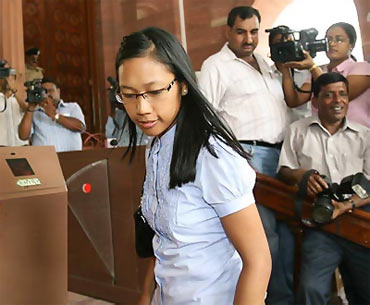
Women's Day is coming up tomorrow and we're marking the occasion with a series on India's women achievers across the fields of politics.
Today, we take a look at five young women who have made a name for themselves in Indian politics.
And if you thought that wasn't enough, Agatha Sangma is also the first ever woman MP to be elected from the state of Meghalaya. She represents the Tura constituency and her portfolio is minister of state for rural development.
In a country where political significance is seldom heard of before middle age, Sangma stands out as proof to the contrary. She also comes heavily qualified academically, holding an MA in Environmental Management from Nottingham University in the UK, as well as diplomas in Cyber Laws, Corporate Laws, Human Rights Laws and Securities & Investment Laws.
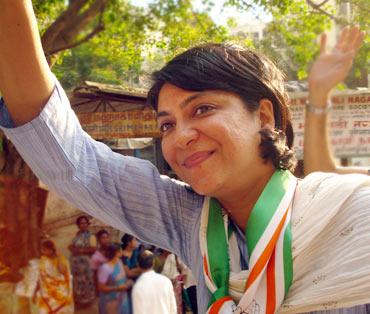 Sanjay Dutt's younger sis has been an MP since 2005, when she was elected from her father Sunil Dutt's constituency, Mumbai North-West. She was re-elected to the 15th Lok Sabha last year as a candidate of the Indian National Congress -- the same political party that her parents belonged to -- from the Mumbai North Central constituency, as hers became after delimitation.
In addition to her political endeavours and raising two kids, Priya Dutt, runs a charity, the Nargis Dutt Memorial Charitable Trust, and was recently the recipient of the Young Political Achiever Award from the NGO Pearls Wave. A politician and a philanthropist -- now that's a rare combination!
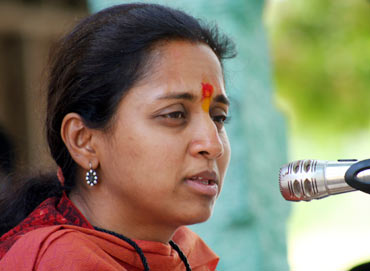
Sharad Pawar's daughter is following in his political footsteps. Supriya Sule is an MP from the Nationalist Congress Party, having contested and won the elections last year for the Baramati Lok Sabha constituency that her father previously represented. Prior to that, she was a member of the Rajya Sabha.
Sule is representative of the modern Indian woman, juggling motherhood (she has two children) and family life alongside a hectic political career.
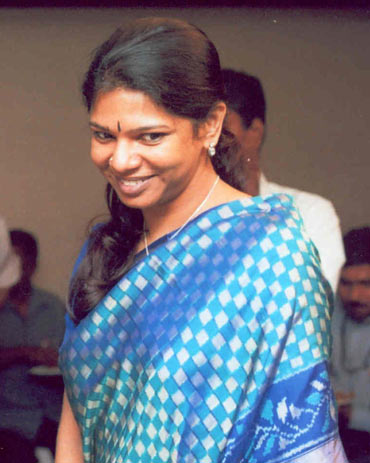
Here's another lady who was born into a political family and decided to pursue a career in politics. Kanimozhi (she prefers to go by only her first name) is the daughter of Tamil Nadu Chief Minister M Karunanidhi and a is member of the Rajya Sabha, where represents Tamil Nadu.
Like Sule, she is a wife and mother, but manages to pursue her career. In addition, she is also a poet and worked as a journalist before making her foray into politics. A lady of many talents, if ever there was one!
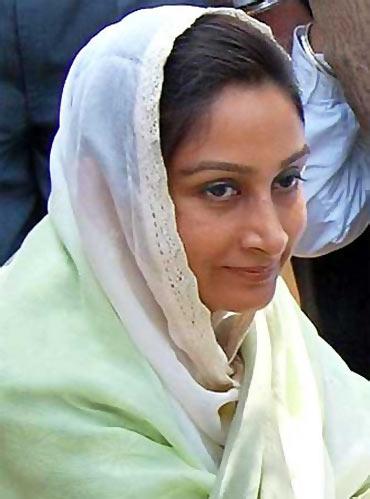
And finally, we come to our last candidate, Harsimrat Kaur Badal. Daughter-in-law of Punjab Chief Minister Parkash Singh Badal, Harsimrat represents Bathinda in the 15th Lok Sabha and won a much-publicised political battle last year to secure her seat.
In addition, Badal is mother to three children, and makes a pretty picture with her husband Sukhbir Singh Badal, who is also president of the Shiromani Akali Dal.
Read On
Indian women may hold a third of legislature seats
NEW DELHI — India’s government will present a bill to lawmakers Monday aimed at empowering the nation’s often-marginalized women by reserving one-third of legislative seats for them, a governing party spokesman said.
The plan has faced strong opposition since it was first proposed more than a decade ago, with many political leaders worried that their male-dominated parties would lose seats under a female quota system.
But Prime Minister Manmohan Singh’s government, which was re-elected last year, is confident it has enough support this time and is presenting the bill to Parliament on International Women’s Day.
Congress party spokesman Manish Tewari said Sunday he foresaw no issues standing in its way. It will be debated in the upper house of Parliament on Monday and later be sent to the lower house, he said.
The bill is an attempt to correct some of the historical mistreatment of women. Most Indian women receive far less education than men and are weighed down by illiteracy, poverty and low social status. For the millions working in fields, factories and sweatshops for minimal wages, political choices are often still made by their husbands or male community leaders.
The bill would raise the number of female lawmakers in the 545-seat lower house to 181 from the current 59. It would nearly quadruple the number of women in the 250-seat upper house. The bill would also apply to state legislatures.
Sushma Swaraj, a leader of the main opposition Bharatiya Janata Party, and Birnda Karat of the Communist Party of India (Marxist), said their parties already have asked their lawmakers to vote for the legislation.
Small opposition socialist groups still oppose the bill, demanding that a portion of the women’s quota be set aside for minorities and lower castes, which have been socially and economically deprived as well.
In the past, India has had only a few powerful women leaders and — as in other South Asian countries — they often entered office because they were related to powerful men.
India’s only female prime minister, Indira Gandhi, was the daughter of the country’s first prime minister, Jawaharlal Nehru. Elected in 1966, she shattered many barriers in Indian society in her nearly 16 years in office, but did little to empower other women.
In recent years, however, women have made some strong inroads in the nation’s political elite. A woman occupies the mainly ceremonial post of president and another is speaker of Parliament’s powerful lower house.
Italian-born Sonia Gandhi, wife of former Prime Minister Rajiv Gandhi — and also Indira Gandhi’s daughter-in-law — is the leader of the Congress party.
Also, about 40 percent of elected representatives in village councils are women, Prime Minister Singh said.
Read On
 By Amulya Ganguli
The man who seemed incapable of raising his voice has changed. The soft-spoken Manmohan Singh is no longer as mild-mannered as before. Behind the amiable exterior, a hint of steel is now visible, as the opposition Bharatiya Janata Party’s (BJP) leader L.K. Advani learnt to his cost in the Lok Sabha Wednesday.
When the BJP leader accused him of conducting secret, back-channel negotiations with Pakistan, the prime minister reminded him of the series of similar talks which Jaswant Singh, foreign minister in the Atal Bihari Vajpayee government, had with Strobe Talbott, the US deputy secretary of state at the time.
It is surprising that Advani tried to provoke Manmohan Singh considering how the latter had silenced him last year by accusing the BJP leader of shedding helpless tears even as the Babri Masjid was being demolished in his presence. That stinging riposte was the prime minister’s answer to the continuous efforts by Advani and his party to portray the Indian prime minister as “weak” before last year’s general election. After the results were out, the BJP acknowledged that its charges had misfired.
That was the period when the prime minister gave the first sign of his toughness by sticking to his guns on the nuclear deal despite the reservations expressed by his own party and some of its allies. Even if Rahul Gandhi’s support for the deal finally persuaded the party to support the measure, it was Manmohan Singh’s advocacy which played a crucial role.
That was also the period when the prime minister did not flinch when the Left withdrew its support to the government for “selling out” to American “imperialism” even though it meant going to the polls without this ally of four years. Since then the Congress victory and the setbacks suffered by the Left and the BJP have strengthened his position. As a result, evidence is mounting about his intention to chart out his own course in domestic and foreign policies.
It is obvious, of course, that but for the “back channel” support extended to him by Congress president Sonia Gandhi, and heir apparent Rahul Gandhi, the prime minister would not have been able to pursue his line with such determination. But the two Gandhis may have also realised - from the nuclear deal affair which swung the urban middle class back to the Congress from the BJP - that Manmohan Singh is in sync with the new generation.
Even if on some issues, like peace talks with Pakistan, he may be pushing a line which does not have wide support because of the Mumbai massacres and the subsequent outrage in Pune, the fact remains that he is willing to stick his neck out on what he considers the right step. “Dialogue is the only way forward for civilised countries to resolve their problems,” he said in parliament.
He may be doing the same on the question of introducing genetically modified foods as well since the strong lobby against them seems to have succeeded for the time being in turning public opinion against them for being unsafe. But since the prime minister believes that GM foods are the way to a second green revolution, he is unlikely to give up the battle just because the introduction of Bt brinjal has been stalled for the present.
But the step which shows how determined he is to stand firm against populism is evident from his refusal to roll back the fuel price hike. Any move to increase the prices of petrol and diesel has always been extremely difficult in India because the opposition politicians immediately seize upon the issue to express concern for the ordinary people.
Their familiar charge is that the higher transportation charges will lead to an increase in food prices and add to the inflationary spiral. Because of the populist nature of their stance, the government is usually forced to roll back the prices. The possibility of such a retreat was all the greater this time because two of the government’s allies - the Trinamool Congress (TC) and the DMK - were in favour of a reduction of the prices even if it meant imposing a crippling burden on the oil companies since the international prices are ruling high.
But Manmohan Singh’s firmness has compelled both Trinamool and the DMK to tone down their rhetoric and promise to continue supporting the government. Their backing is all the more important because the Left and the BJP are dropping their allergies towards one another - the Left calls the BJP “communal” and the BJP dubs the communists pro-Chinese - to join hands against the common adversary, the Congress. The Left and the BJP were also on the same side of the fence in their opposition to the nuclear deal.
The other issue on which the prime minister has shown his firmness is the drive against the Maoist extremists although the Left liberals argue that the root cause of ending the exploitation of tribals has to be addressed first before taking on the Maoists. Otherwise, many innocent tribals will lose their lives in the crossfire.
The other view is that the Maoists have been able to set up a “red corridor” over a large area of the hinterland because of the government’s earlier failure to assess their strength. Any delay in tackling them will only help them to consolidate their position by befriending as well as terrorising the tribals.
If Home Minister P. Chidambaram is the front man for the anti-Maoist operation, Finance Minister Pranab Mukherjee is dealing with the fuel price hike. But everyone knows who is the inspirational force behind these definitive moves.
There is little doubt that no other prime minister after Jawaharlal Nehru had the courage of conviction to provide purposeful governance. P.V. Narasimha Rao may have initiated the economic reforms with Manmohan Singh as finance minister. But that was an unavoidable response to a balance of payments crisis.
For Manmohan Singh, the reforms are a matter of ideological conviction even if the pace has been slow because of the Left’s earlier resistance and the subsequent recession, which is ending only now. The nuclear deal, too, has marked the end of the era of non-alignment and the resultant prolonged cool relations between India and the US.
The prime minister has been lucky, however, in having as his party chief a person like Sonia Gandhi who has given him a free hand after choosing him as the man to head the government in 2004.
Read On
Read On
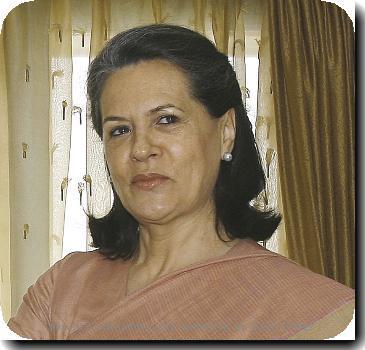 NEW DELHI - Prime Minister Dr Manmohan Singh has reportedly disagreed with Congress President Sonia Gandhi over the Right to Information (RTI) Act.
As per news channels, Dr Singh is in favour of excluding the office of the Chief Justice of India (CJI) from falling under the ambit of the RTI Act, whereas Sonia Gandhi has opposed any amendments in the Act.
The changes proposed by the Prime Minister in the RTI Act will keep the office of the Chief Justice of India out of the purview of the Act.
There are reports that Dr Singh has written a letter to Congress President saying that some changes are needed in the RTI Act to address the concerns of the judiciary.
A leading news channel on Thursday night reported that Sonia Gandhi wrote to Dr Singh two months ago that she was determined that there should be no amendments to the Act and the existing RTI Act should be put into operation appropriately.
The channel further reported that Dr Singh in his reply said there was a need for RTI amendments, but all stakeholders would be consulted prior to making any alteration.
There are reports that the Chief Justice of India (CJI), K G Balakrishnan, wrote a letter to Dr Singh in November 2009 expressing concern over the possible consequences of bringing his office into the purview of the RTI Act.
Read On
Read On
 Shillong, Mar 2 : The BJP in Meghalaya today demanded the resignation of Union minister Vincent Pala alleging his role in last year's controversial jailbreak case.
BJP leaders met Governor R S Mooshahary and dashed off a memorandum to President Pratibha Patil demanding the ouster of the minister of state for water resources from the Union Cabinet.
State BJP president H S Syiemlieh claimed that three undertrials had confessed before the inquiry commission headed by Justice (retired) T Biswas, which is likely to establish the nexus between criminals, police and politicians, including Pala.
The state government had ordered a judicial probe into the controversial jailbreak incident of May 31 that saw the escape of seven dreaded criminals, one of whom was shot dead and others captured later.
Read On
 Guwahati, Mar 2 Former Assam chief minister Prafulla Kumar Mahanta today said there was nothing new in the Union Budget for the people of the North Eastern region.
"The Budget presented by finance minister Pranab Mukherjee has nothing new and no major schemes for Assam and North East," Mahanta told reporters here.
"The hike in fuel prices has resulted in a price rise of essential commodities in the region which is dependent on food supply from other states.
"It was a personal failure for chief minister Tarun Gogoi who could never convince the government run by his party about the needs of the region," he said.
The former chief minister said his party will raise the issue of price rise and the multi-crore North Cachar Hill development fund scandal in the budget session of the state assembly starting tomorrow.
Read On
Read On

Read On
Govt may take a call on women's bill after PM meets Yadav trio
NEW DELHI: Government is likely to take a call on whether to go ahead with the Women's Reservation Bill in the Rajya Sabha after Prime Minister Manmohan Singh meets the Yadav trio, the opponents of the bill, tomorrow morning.
A decision about the Bill, voting on which was deferred in the Rajya Sabha following unprecedented pandemonium, would be taken after the parleys, highly-placed Congress sources said.
SP leader Mulayam Singh Yadav, RJD chief Lalu Prasad and JD(U) president Sharad Yadav will meet Singh at 9.30 am in Parliament House ahead of the day's business which commences at 11 am.
The three leaders have been complaining about the government not consulting them over the constitution amendment bill. They want a political consensus and have warned of dire consequences if it is bulldozed in Parliament.
The strategy in this regard was finalised by the Congress top brass including the Prime Minister and Congress President Sonia Gandhi at a meeting of the party's Core Group tonight.
The meeting was attended among others by Pranab Mukherjee, A K Antony, P Chidambaram and Political Secretary to Congress President Ahmed Patel.
Following up on their threat to withdraw support, RJD chief Prasad along with party leader Prem Chandra Gupta met President Pratibha Patil and apprised her of his party's position on the bill.
Prasad as also Mulayam Singh Yadav have threatened to withdraw support to the UPA government if it goes ahead with the bill in its present form.
A decision about the Bill, voting on which was deferred in the Rajya Sabha following unprecedented pandemonium, would be taken after the parleys, highly-placed Congress sources said.
SP leader Mulayam Singh Yadav, RJD chief Lalu Prasad and JD(U) president Sharad Yadav will meet Singh at 9.30 am in Parliament House ahead of the day's business which commences at 11 am.
The three leaders have been complaining about the government not consulting them over the constitution amendment bill. They want a political consensus and have warned of dire consequences if it is bulldozed in Parliament.
The strategy in this regard was finalised by the Congress top brass including the Prime Minister and Congress President Sonia Gandhi at a meeting of the party's Core Group tonight.
The meeting was attended among others by Pranab Mukherjee, A K Antony, P Chidambaram and Political Secretary to Congress President Ahmed Patel.
Following up on their threat to withdraw support, RJD chief Prasad along with party leader Prem Chandra Gupta met President Pratibha Patil and apprised her of his party's position on the bill.
Prasad as also Mulayam Singh Yadav have threatened to withdraw support to the UPA government if it goes ahead with the bill in its present form.
Young women achievers in politics
Women's Day is coming up tomorrow and we're marking the occasion with a series on India's women achievers across the fields of politics.
Today, we take a look at five young women who have made a name for themselves in Indian politics.
Agatha Sangma
She became India's youngest Parliamentarian in 2008 at the age of 27 and was re-elected to the 15th Lok Sabha last year to become the youngest minister in Prime Minister Manmohan Singh's cabinet.And if you thought that wasn't enough, Agatha Sangma is also the first ever woman MP to be elected from the state of Meghalaya. She represents the Tura constituency and her portfolio is minister of state for rural development.
In a country where political significance is seldom heard of before middle age, Sangma stands out as proof to the contrary. She also comes heavily qualified academically, holding an MA in Environmental Management from Nottingham University in the UK, as well as diplomas in Cyber Laws, Corporate Laws, Human Rights Laws and Securities & Investment Laws.
Priya Dutt
Sanjay Dutt's younger sis has been an MP since 2005, when she was elected from her father Sunil Dutt's constituency, Mumbai North-West. She was re-elected to the 15th Lok Sabha last year as a candidate of the Indian National Congress -- the same political party that her parents belonged to -- from the Mumbai North Central constituency, as hers became after delimitation.In addition to her political endeavours and raising two kids, Priya Dutt, runs a charity, the Nargis Dutt Memorial Charitable Trust, and was recently the recipient of the Young Political Achiever Award from the NGO Pearls Wave. A politician and a philanthropist -- now that's a rare combination!
Supriya Sule
Sharad Pawar's daughter is following in his political footsteps. Supriya Sule is an MP from the Nationalist Congress Party, having contested and won the elections last year for the Baramati Lok Sabha constituency that her father previously represented. Prior to that, she was a member of the Rajya Sabha.
Sule is representative of the modern Indian woman, juggling motherhood (she has two children) and family life alongside a hectic political career.
Kanimozhi
Here's another lady who was born into a political family and decided to pursue a career in politics. Kanimozhi (she prefers to go by only her first name) is the daughter of Tamil Nadu Chief Minister M Karunanidhi and a is member of the Rajya Sabha, where represents Tamil Nadu.
Like Sule, she is a wife and mother, but manages to pursue her career. In addition, she is also a poet and worked as a journalist before making her foray into politics. A lady of many talents, if ever there was one!
Harsimrat Kaur Badal
And finally, we come to our last candidate, Harsimrat Kaur Badal. Daughter-in-law of Punjab Chief Minister Parkash Singh Badal, Harsimrat represents Bathinda in the 15th Lok Sabha and won a much-publicised political battle last year to secure her seat.
In addition, Badal is mother to three children, and makes a pretty picture with her husband Sukhbir Singh Badal, who is also president of the Shiromani Akali Dal.
India’s Parliament to consider giving women one-third of all legislative seats
Indian women may hold a third of legislature seats
NEW DELHI — India’s government will present a bill to lawmakers Monday aimed at empowering the nation’s often-marginalized women by reserving one-third of legislative seats for them, a governing party spokesman said.
The plan has faced strong opposition since it was first proposed more than a decade ago, with many political leaders worried that their male-dominated parties would lose seats under a female quota system.
But Prime Minister Manmohan Singh’s government, which was re-elected last year, is confident it has enough support this time and is presenting the bill to Parliament on International Women’s Day.
Congress party spokesman Manish Tewari said Sunday he foresaw no issues standing in its way. It will be debated in the upper house of Parliament on Monday and later be sent to the lower house, he said.
The bill is an attempt to correct some of the historical mistreatment of women. Most Indian women receive far less education than men and are weighed down by illiteracy, poverty and low social status. For the millions working in fields, factories and sweatshops for minimal wages, political choices are often still made by their husbands or male community leaders.
The bill would raise the number of female lawmakers in the 545-seat lower house to 181 from the current 59. It would nearly quadruple the number of women in the 250-seat upper house. The bill would also apply to state legislatures.
Sushma Swaraj, a leader of the main opposition Bharatiya Janata Party, and Birnda Karat of the Communist Party of India (Marxist), said their parties already have asked their lawmakers to vote for the legislation.
Small opposition socialist groups still oppose the bill, demanding that a portion of the women’s quota be set aside for minorities and lower castes, which have been socially and economically deprived as well.
In the past, India has had only a few powerful women leaders and — as in other South Asian countries — they often entered office because they were related to powerful men.
India’s only female prime minister, Indira Gandhi, was the daughter of the country’s first prime minister, Jawaharlal Nehru. Elected in 1966, she shattered many barriers in Indian society in her nearly 16 years in office, but did little to empower other women.
In recent years, however, women have made some strong inroads in the nation’s political elite. A woman occupies the mainly ceremonial post of president and another is speaker of Parliament’s powerful lower house.
Italian-born Sonia Gandhi, wife of former Prime Minister Rajiv Gandhi — and also Indira Gandhi’s daughter-in-law — is the leader of the Congress party.
Also, about 40 percent of elected representatives in village councils are women, Prime Minister Singh said.
A new Manmohan Singh takes a bow
By Amulya GanguliThe man who seemed incapable of raising his voice has changed. The soft-spoken Manmohan Singh is no longer as mild-mannered as before. Behind the amiable exterior, a hint of steel is now visible, as the opposition Bharatiya Janata Party’s (BJP) leader L.K. Advani learnt to his cost in the Lok Sabha Wednesday.
When the BJP leader accused him of conducting secret, back-channel negotiations with Pakistan, the prime minister reminded him of the series of similar talks which Jaswant Singh, foreign minister in the Atal Bihari Vajpayee government, had with Strobe Talbott, the US deputy secretary of state at the time.
It is surprising that Advani tried to provoke Manmohan Singh considering how the latter had silenced him last year by accusing the BJP leader of shedding helpless tears even as the Babri Masjid was being demolished in his presence. That stinging riposte was the prime minister’s answer to the continuous efforts by Advani and his party to portray the Indian prime minister as “weak” before last year’s general election. After the results were out, the BJP acknowledged that its charges had misfired.
That was the period when the prime minister gave the first sign of his toughness by sticking to his guns on the nuclear deal despite the reservations expressed by his own party and some of its allies. Even if Rahul Gandhi’s support for the deal finally persuaded the party to support the measure, it was Manmohan Singh’s advocacy which played a crucial role.
That was also the period when the prime minister did not flinch when the Left withdrew its support to the government for “selling out” to American “imperialism” even though it meant going to the polls without this ally of four years. Since then the Congress victory and the setbacks suffered by the Left and the BJP have strengthened his position. As a result, evidence is mounting about his intention to chart out his own course in domestic and foreign policies.
It is obvious, of course, that but for the “back channel” support extended to him by Congress president Sonia Gandhi, and heir apparent Rahul Gandhi, the prime minister would not have been able to pursue his line with such determination. But the two Gandhis may have also realised - from the nuclear deal affair which swung the urban middle class back to the Congress from the BJP - that Manmohan Singh is in sync with the new generation.
Even if on some issues, like peace talks with Pakistan, he may be pushing a line which does not have wide support because of the Mumbai massacres and the subsequent outrage in Pune, the fact remains that he is willing to stick his neck out on what he considers the right step. “Dialogue is the only way forward for civilised countries to resolve their problems,” he said in parliament.
He may be doing the same on the question of introducing genetically modified foods as well since the strong lobby against them seems to have succeeded for the time being in turning public opinion against them for being unsafe. But since the prime minister believes that GM foods are the way to a second green revolution, he is unlikely to give up the battle just because the introduction of Bt brinjal has been stalled for the present.
But the step which shows how determined he is to stand firm against populism is evident from his refusal to roll back the fuel price hike. Any move to increase the prices of petrol and diesel has always been extremely difficult in India because the opposition politicians immediately seize upon the issue to express concern for the ordinary people.
Their familiar charge is that the higher transportation charges will lead to an increase in food prices and add to the inflationary spiral. Because of the populist nature of their stance, the government is usually forced to roll back the prices. The possibility of such a retreat was all the greater this time because two of the government’s allies - the Trinamool Congress (TC) and the DMK - were in favour of a reduction of the prices even if it meant imposing a crippling burden on the oil companies since the international prices are ruling high.
But Manmohan Singh’s firmness has compelled both Trinamool and the DMK to tone down their rhetoric and promise to continue supporting the government. Their backing is all the more important because the Left and the BJP are dropping their allergies towards one another - the Left calls the BJP “communal” and the BJP dubs the communists pro-Chinese - to join hands against the common adversary, the Congress. The Left and the BJP were also on the same side of the fence in their opposition to the nuclear deal.
The other issue on which the prime minister has shown his firmness is the drive against the Maoist extremists although the Left liberals argue that the root cause of ending the exploitation of tribals has to be addressed first before taking on the Maoists. Otherwise, many innocent tribals will lose their lives in the crossfire.
The other view is that the Maoists have been able to set up a “red corridor” over a large area of the hinterland because of the government’s earlier failure to assess their strength. Any delay in tackling them will only help them to consolidate their position by befriending as well as terrorising the tribals.
If Home Minister P. Chidambaram is the front man for the anti-Maoist operation, Finance Minister Pranab Mukherjee is dealing with the fuel price hike. But everyone knows who is the inspirational force behind these definitive moves.
There is little doubt that no other prime minister after Jawaharlal Nehru had the courage of conviction to provide purposeful governance. P.V. Narasimha Rao may have initiated the economic reforms with Manmohan Singh as finance minister. But that was an unavoidable response to a balance of payments crisis.
For Manmohan Singh, the reforms are a matter of ideological conviction even if the pace has been slow because of the Left’s earlier resistance and the subsequent recession, which is ending only now. The nuclear deal, too, has marked the end of the era of non-alignment and the resultant prolonged cool relations between India and the US.
The prime minister has been lucky, however, in having as his party chief a person like Sonia Gandhi who has given him a free hand after choosing him as the man to head the government in 2004.
UPA all out to rein in price rise: PM
New Delhi, March 6
Ruling out a rollback of the recent hike in petrol and diesel prices, Prime Minister Manmohan Singh today told the Parliament that the UPA was alive to the problem of food inflation and had taken all possible measures to address the issue.The Prime Minister said the government would take more effective steps to curb inflation.
“I assure the House that if any practical methods can further bring relief, we will be sensitive to the concerns of ‘aam aadmi’,” the PM said while replying to the motion of thanks on the presidential address.
His 75-minute speech was devoted largely to the urgency of growth to spur socio-economic development and the anxiety over food price rise — the issue that stalled the budget session until yesterday.
On the economic front, the PM was confident of 7.5 per cent growth rate this fiscal, and a return to 9 per cent in two years. He also predicted double digit growth, provided the country reduced the scope of corruption through better processes of governance. “This is the vision we are working to realise,” was the PM’s line.
 On food front, he blamed the crisis on factors beyond government control -- the rising international commodity prices and a severe drought back home (worst since 1972), but ruled out panic, pointing to comfortable levels of food stock with the Centre. His message was clear — the worst is over.
“Rabi prospects are very encouraging. Post-monsoon rains have been good. This augurs well for our ability to stabilise food prices at a reasonable level,” PM assured the members, listing measures taken to contain inflation, including permission to import raw and white sugar at zero duty and empowering states to punish hoarders.
That, however, didn’t keep the PM from admitting that the sugar economy needed to be stablilised. “We’ll find ways to see that prices of sugar can be stabilised at a reasonable level unmindful of the cyclical nature of the production of sugar,” he said, as the House kept witnessing interruptions on the issue of recent petrol and diesel hike.
But, Manmohan Singh was determined to justify UPA’s strategy on inflation, leaving the Opposition with little to reason. When it was CPM’s turn to move four amendments, few opposition MPs were seated in Lok Sabha. Even BJP’s Murali Manohar Joshi had left after the PM rebuffed as a “galatfehmi (misunderstanding) his contention that the government was seeking US help for India’s agricultural problems.
Ruling out a rollback of the recent hike in petrol and diesel prices, Prime Minister Manmohan Singh today told the Parliament that the UPA was alive to the problem of food inflation and had taken all possible measures to address the issue.The Prime Minister said the government would take more effective steps to curb inflation.
| Minorities want quota within quota With Parliament ready to vote on the Women’s Reservation Bill, minority and Dalit groups on Friday stepped up their demand for including the provision of quota for backward women and threatened to launch protests if the issue was not addressed. |
His 75-minute speech was devoted largely to the urgency of growth to spur socio-economic development and the anxiety over food price rise — the issue that stalled the budget session until yesterday.
On the economic front, the PM was confident of 7.5 per cent growth rate this fiscal, and a return to 9 per cent in two years. He also predicted double digit growth, provided the country reduced the scope of corruption through better processes of governance. “This is the vision we are working to realise,” was the PM’s line.
On food front, he blamed the crisis on factors beyond government control -- the rising international commodity prices and a severe drought back home (worst since 1972), but ruled out panic, pointing to comfortable levels of food stock with the Centre. His message was clear — the worst is over. “Rabi prospects are very encouraging. Post-monsoon rains have been good. This augurs well for our ability to stabilise food prices at a reasonable level,” PM assured the members, listing measures taken to contain inflation, including permission to import raw and white sugar at zero duty and empowering states to punish hoarders.
That, however, didn’t keep the PM from admitting that the sugar economy needed to be stablilised. “We’ll find ways to see that prices of sugar can be stabilised at a reasonable level unmindful of the cyclical nature of the production of sugar,” he said, as the House kept witnessing interruptions on the issue of recent petrol and diesel hike.
But, Manmohan Singh was determined to justify UPA’s strategy on inflation, leaving the Opposition with little to reason. When it was CPM’s turn to move four amendments, few opposition MPs were seated in Lok Sabha. Even BJP’s Murali Manohar Joshi had left after the PM rebuffed as a “galatfehmi (misunderstanding) his contention that the government was seeking US help for India’s agricultural problems.
Manmohan Singh not in tune with Sonia Gandhi over RTI
As per news channels, Dr Singh is in favour of excluding the office of the Chief Justice of India (CJI) from falling under the ambit of the RTI Act, whereas Sonia Gandhi has opposed any amendments in the Act.
The changes proposed by the Prime Minister in the RTI Act will keep the office of the Chief Justice of India out of the purview of the Act.
There are reports that Dr Singh has written a letter to Congress President saying that some changes are needed in the RTI Act to address the concerns of the judiciary.
A leading news channel on Thursday night reported that Sonia Gandhi wrote to Dr Singh two months ago that she was determined that there should be no amendments to the Act and the existing RTI Act should be put into operation appropriately.
The channel further reported that Dr Singh in his reply said there was a need for RTI amendments, but all stakeholders would be consulted prior to making any alteration.
There are reports that the Chief Justice of India (CJI), K G Balakrishnan, wrote a letter to Dr Singh in November 2009 expressing concern over the possible consequences of bringing his office into the purview of the RTI Act.
BJP flays CM over NIA probe
GUWAHATI, March 5 – The Bharatiya Janata Party (BJP), Assam Pradesh on Thursday accused the Tarun Gogoi Government of misleading the people of the State in connection with the National Investigation Agency (NIA) inquiry into the nexus between militants and politicians in NC Hills district.
Addressing media persons here, State BJP president Ranjit Dutta said that the Congress Government has been trying to drag BJP’s Kulendra Daulagupu’s name into the alleged militant-politician nexus which was investigated by the NIA.
“The NIA has accused 14 individuals in its chargesheet and Daulagupu’s name is not in this list. His name has come up as a Prosecution Witness,” said Dutta producing a copy of the NIA chargesheet.
The party said that the Congress government has also been using the Manisana Commission report as a weapon to blackmail the opposition.
“While the ASDC-BJP alliance was in power in the NC Hills Autonomous Council, the Congress government always exerted pressure on it,” said Dutta.
Addressing media persons here, State BJP president Ranjit Dutta said that the Congress Government has been trying to drag BJP’s Kulendra Daulagupu’s name into the alleged militant-politician nexus which was investigated by the NIA.
“The NIA has accused 14 individuals in its chargesheet and Daulagupu’s name is not in this list. His name has come up as a Prosecution Witness,” said Dutta producing a copy of the NIA chargesheet.
The party said that the Congress government has also been using the Manisana Commission report as a weapon to blackmail the opposition.
“While the ASDC-BJP alliance was in power in the NC Hills Autonomous Council, the Congress government always exerted pressure on it,” said Dutta.
BJP demands resignation of Union minister Pala
BJP leaders met Governor R S Mooshahary and dashed off a memorandum to President Pratibha Patil demanding the ouster of the minister of state for water resources from the Union Cabinet.
State BJP president H S Syiemlieh claimed that three undertrials had confessed before the inquiry commission headed by Justice (retired) T Biswas, which is likely to establish the nexus between criminals, police and politicians, including Pala.
The state government had ordered a judicial probe into the controversial jailbreak incident of May 31 that saw the escape of seven dreaded criminals, one of whom was shot dead and others captured later.
Nothing new in Union Budget for N-E: Mahanta
"The Budget presented by finance minister Pranab Mukherjee has nothing new and no major schemes for Assam and North East," Mahanta told reporters here.
"The hike in fuel prices has resulted in a price rise of essential commodities in the region which is dependent on food supply from other states.
"It was a personal failure for chief minister Tarun Gogoi who could never convince the government run by his party about the needs of the region," he said.
The former chief minister said his party will raise the issue of price rise and the multi-crore North Cachar Hill development fund scandal in the budget session of the state assembly starting tomorrow.
Assam Opposition sharpens knives
Guwahati, March 2 : The Assam Opposition is gearing up to corner the government into extending the probe into financial anomalies in North Cachar Hills to all public servants, encouraged by its success in extracting the CBI inquiry into the case.
The extended demand, expected during the budget session beginning tomorrow, will also include dropping of ministers whose names allegedly cropped up during the probe by the National Investigation Agency (NIA) but did not figure in the chargesheet.
The AGP, BJP and the AIUDF legislators held several meetings throughout the day for effective floor co-ordination in the Assembly to pin down the government.
They are determined to raise issues related to the NIA probe, price rise, dams in Arunachal Pradesh and widespread corruption in government departments.
The NIA probe hit the headlines after a weekly revealed how the agency had, in a report, named seven ministers for their alleged involvement in the North Cachar Hills scam but had not named them among the 14 charge-sheeted in November. It also mentioned that around Rs 1,000 crore was allegedly swindled between 2004 and 2009.
The controversy revolves around the allegation that a nexus of politicians, bureaucrats and militants were siphoning off funds meant for the development of the hill district. When chief minister Tarun Gogoi recommended the CBI probe after a meeting with Union home minister P. Chidambaram last week after denying to do so earlier, the Opposition claimed that it stood vindicated.
AGP working president Phanibhushan Choudhury said the party would want the ministers named by the NIA to be dropped till the CBI probe was completed to enable the apex investigating agency to get to the bottom of the matter.
He also wanted the probe to cover all public servants associated with North Cachar Hills and not only those who have served in the district.
BJP’s newly appointed state president, Ranjit Dutta, said the CBI probe had to be widened because the funds were routed through Dispur.
Price rise was another issue that the Opposition will highlight, citing Dispur as well as Delhi’s failure to rein in price. The budget will be presented on March 15.
Alleged corruption in social sector schemes like the National Rural Employment Guarantee Act is also likely to figure during the session.
The council of ministers and Congress Legislature Party met this evening to chalk out a strategy to counter the Opposition’s onslaught and discuss the governor’s speech.
My Blog List
-
Enrolment in govt schools significantly rose post pandemic: Mizoram education minister - Mizoram State Education Minister Lalchhandama Ralte said in a meeting that enrollment in Mizoram government schools increased significantly after the pande...4 years ago
