PolitiClone
Political Pundits? India

"Dalit Queen" weaves magic on Indian campaign trail

8:09 AM
VARANASI, India - As the helicopter swooped down a cloudless sky, a tide of "untouchables" surged forward for a glimpse of their new champion -- a stout 53-year-old woman billed as India's potential prime minister.

The woman smiled and offered a windshield-wiper wave, sending the crowd into raptures. They sang songs in her praise and raised their hands in the air, as if in deference to a goddess who has descended from the sky.

This is Mayawati, a daughter of "Dalits" or people formerly known as "untouchables," whose inventive caste-based politics in this general election is the hope of change for millions born into the poverty and wretchedness of the lowest rungs of the Hindu social hierarchy.

"No one feels for you the way our party does," Mayawati told a weekend rally in this northern holy town of Hindu gurus.

Hop scotching India by helicopter ahead of a staggered general election beginning Thursday, Mayawati is seeking to replicate across the country her stunning landslide victory in local polls in the northern Uttar Pradesh state in 2007.

A key swing state, Uttar Pradesh is the single largest source of seats in parliament and Mayawati is positioning herself as a vital ally to whichever party may need her to govern. She could even bargain to be India's first Dalit prime minister.

"Mayawati should be doubling her seats this time in the state which will allow her to leverage better as a coalition leader," political commentator Anil Verma said. Her party won 19 parliamentary seats from Uttar Pradesh in 2004.

Analysts say such a government was unlikely to be stable or be able to bridge a yawning fiscal deficit and push financial reforms, including slashing subsidies and privatization.

Critics say Mayawati and her Bahujan Samaj Party (BSP) are siphoning off state funds to pay for her personal whims, from expensive houses, jeweler to bronze statues of herself.


AUTHORITARIAN
At the rally in Varanasi in support of her candidate -- a Muslim now in jail on murder charges -- her stage was cooled by four air-conditioners. Her supporters braved a baking sky.

One of nine children, Mayawati managed to study law and become a teacher through a government quota scheme for Dalits before being mentored by the BSP's founder.

Since her election win in 2007, she has inaugurated one of India's biggest highway projects, spent millions on parks and statues, and wielded what critics say is an authoritarian stick.

She has already faced probes over her personal wealth.

But Mayawati, affectionately called "Behenji," or respected sister, is an icon for most of India's 170 million lower-caste people she is trying to mobilize.

Yet Dalits alone are not enough to win Mayawati power.


Mayawati won the state election with an unlikely alliance of Dalits and the priestly Brahmins, the cream of the caste system. She is now trying to replicate that alliance in other states.

But corruption is the most serious criticism of Mayawati and her two years in power have spawned disillusionment among a section of the youth complaining of no jobs or opportunities.

The national parties -- the ruling Congress and the opposition Bharatiya Janata Party -- have little presence in the state. Many Dalits think Mayawati is simply unstoppable now.

"There is little to come in the way of Behenji," said Mangat Ram, a Dalit farm hand.
Read On

Lok-Sabha Elections in Assam: Waveless and Unpredictable

8:04 AM
By Isfaqur Rahman

The election scenario in Assam has been hazy and the prospects of the contending parties are still unpredictable. It has been a seemingly waveless election and the campaign largely media driven. There was, however, perceptible anti-incumbancy sentiment, if not wave, sweeping across the state.

Sporadic incidents of extremist violence and subversive activities became a cause of worry on the eve of the elections. The stepped up extremist offensives of the banned outfits in Karbi-Anglong and North Cachar vitiated the atmosphere and affected electioneering in the two hill districts. In the Brahmaputra valley, too, the situation was not quite condusive, free and fair. Stray but frequent incidents of bomb-blasts and extremist attacks left several persons dead in the run-up to the elections. In the capital city of Guwahati alone, at least 10 persons were killed since the announcement of the poll schedule.

Of the 14 Lok Sabha seats in Assam, the ruling Congress put up its candidates in 13 seats leaving one seat — Kokrajhar to its coalition partner — the Bodo People's Front (BPF). However, the BPF has fielded its own candidate in Mangaldoi LS constituency against the Congress nominee and the two parties are engaged in 'friendly' fight in the seat. In the 2006 Assembly polls, the Hagrama Mahilary-led BPF won 11 of the 126 seats and extended support to Mr. Tarun Gogoi-led Congress-BPF coalition government.

Although the BJP has been licking its wounds inflicted by its former allies in most States, it has been able to thrash out an alliance with the Asom Gana Parishad (AGP) in Assam. The AGP has been forced to become a junior partner by getting only six of the 14 LS seats. The regional party has still been facing hit from a substantial section of its workers and supporters who were angry with the leadership for joining hands with the communal BJP. The AGP is on the backfoot for the unholy alliance and the issue has virtually become a thorn in the flesh of its leadership. Although it has stitched up an alliance with the BJP, the regional party still maintains that it is not a constituent of the BJP-led NDA.

The Rabiram Narzary-led Bodo People's Progressive Front (BPPF) has snapped its ties with the AGP on the eve of the elections. Cracks had appeared in the two party alliance after AGP joined hands with the BJP and decided to put up its own candidate for the Kokrajhar seat. The unprincipled alliance and opportunistic position of the AGP harmed secular-unity in the State.

Barring the left Parties and the relatively new Asom United Democratic Front (AUDF), the non-Congress and non-BJP opposition Parties have little presence and influence in the State. The CPI(M) is the strongest among the left in terms of organisation and influence, area and base. The party tried to consolidate the left unity and to work out seat-sharing arrangements with other secular parties to ensure the defeat of the Congress-BPF and the BJP-AGP combines.

The non-BJP and non-Congress parties, popularly called third force, represented by the CPI(M), CPI, NCP, AUDF and BPPF have tried to build up unity and enter into electoral adjustments. Several rounds of bi-lateral and multi-lateral discussions were also held and it had evoked wide response among the voters who were disenchanted with the ruling Congress-led dispensation and who were not willing to go with the AGP-BJP combine. The seat sharing arrangements, however, could not be properly and smoothy materialised. The big-brotherly and intransigent attitude of the AUDF was largely responsible for the crack in unity among the parties. The unilateral declaration of candidatures by the AUDF before the finalisation of the seat sharing deal hampered the prospects of the third force.

The CPI(M) decided to contest in three seats — Barpeta, Tezpur and Silchar. While the talks were in progress, the AUDF unilaterally fielded its own candidates in all the three seats claimed by the CPI(M). In the Guwahati seat, too, despite a formal agreement to leave the seat to the NCP, the AUDF hurriedly decided to put up its own candidate at the last hour of filing nomination papers. However, despite the internal contradictions and fragile unity, the emergence of the third force has made the contests triangular.

The CPI(M) has put up candidates in three constituencies. It has fielded Durge Deka for the Barpeta seat, Jiten Sundi for the Tezpur seat and Deepak Bhattacharyya for the Silchar seat. Twice represented by senior party leader Uddhab Barman, in 1991 and 1996, the prestigious Barpeta seat is presently represented by the Congress. In the 2004 elections, the Congress candidate A.F. Golam Osmani, who passed away on March 31 last following protracted illness, won the seat. The Tezpur seat is presently held by M. K. Subba of the Congress and the Silchar seat is represented by Union Minister and Congress leader Santosh Mohan Dev.

The CPI (M) has extended support to the CPI candidates in Jorhat, Dibrugarh and Lakhimpur LS seats. It has also supported the Forward Block candidate for the Nagaon seat. The Party had decided to back the NCP candidates in Guwahati and Autonomous District (Diphu) seats while extending support to the BPPF candiates in Kokrajhar and Mangaldoi seats. For the remaining three seats at Dhubri, Karimganj and Kaliabor, the CPI(M) appealed to the voters to cast their votes in favour of non-Congress secular parties.

The AUDF has put up candidates in nine of the 14 LS seats with its president Badruddin Ajmal contesting from two seats — Silchar and Dhubri. Perfume baron Ajmal's brother Sirajuddin Ajmal is also contesting from two seats of the Nagaon and Kaliabor. Both the brothers are presently members of the Assam Assembly. The AUDF with a sizeable minority support base has emerged as a threat to the poll prospects of the ruling Congress in Assam. The State, a traditional Congress bastion has nine MPs from the ruling party. But the emergence of relatively new AUDF since the last Assembly elections in 2006 has made the going difficult for the Congress and it wil certainly spoil the chances of the Congress candidates in a number of seats. The Congress has alleged that the AUDF had entered into a 'secret understanding' with the AGP-BJP combine to defeat the ruling party in the parliamentary polls.

Issues Ignored by Major Parties

The performance of the Tarun Gogoi-led coalition government in Assam has been disappointing. The neo-liberal economic policies of the UPA government has been spelling disaster in the backward State. Now the Congress has been facing a challenging task as most of the 14 LS seats are set to witness triangular contest involving the Congress-BPF coalition. BJP-AGP combine and the Parties of the third force.

In the 2004 elections, the Congress won nine seats while the AGP and the BJP captured two seats each. One seat went to an independent candidate, backed by the All Bodo Students' Union, who later joined the BPF. The Congress secured 35.07 per cent of votes, the BJP 22.94 per cent and the AGP 19.25 per cent.

The run-up to the Lok Sabha elections has made many in the State question the stances of major parties vis-a-vis crucial issues which they believe should have been in the centre of political debate and discussions, but which have either been marginalised or simply ignored. The Congress, BJP and the AGP were least concerned with the issues concerning people and were indulging in mud-slinging and petty quarrels.

The AGP-BJP combine had little in common on the issues confronting the State. The BJP's views on issues like illegal migration, re-structuring of centre-state relations etc. are not similar with the views expressed by the AGP. On the development of Assam, too, the six-year rule of the BJP-led dispensation had done precious little. The BJP leader L. K. Advani had choosen Kheroni in Karbi-Anglong as the venue of his first election rally in Assam and said, his Party was sympathetic to the demand for the creation of two autonomous districts of Karbi Anglong and North Cachar Hills as an Autonomous State within Assam under the provision of Article 244-A of the Constitution. This would, in fact, mean another division of Assam. The BJP's stance on this issue exposed its oppotunistic readiness to make any compromise to win power. It is widely believed, BJP's money power had a big role in stitching up an alliance with the AGP. The alliance, however, suffered a jolt when the nomination of the BJP candidate for the Dhubri constituency was rejected on the ground that he had not submitted the mandatory A-B forms along with the nomination papers.

BPF chief Hagrama Mahilary has stated that the extremist outfit NDFB, currently under ceasefire agreement, helped some Congress candidates for the current Lok Sabha elections in lieu of money. Interestingly, the BPF is a coalition partner of the ruling Congress. Mr. Mahilary, who is also the chief of the Bodoland Territorial Council (BTC), accused the NDFB of helping some BJP and AUDF candidates in the elections in lieu of money. He also revealed that he himself had paid money to the NDFB in 2004 LS polls. The extremist outfit, too, issued statements and admitted that it supported Congress candidate at Tezpur and BJP candidates at Mangaldoi and Guwahati for the current elections. However, the Congress, the BJP and the AUDF are yet to make any official reaction to the accusation that the NDFB helped some of the candidates of the respective parties in exchange of money.

CPI(M) Highlights People's Sufferings

Apart from popularising the national issues incorporated in the CPI(M) Manifesto, the State unit of the Party also published an appeal to the electorate and focussed on certain state-specific issues the people are confronted with.
The State-specific issues were : speedy development of Assam with priority in infrastructure and employment generation, rapid industrialisation on the basis of huge natural resources, solution to the problems of floods and erosion and expansion of irrigation facilities, sealing of Indo-Bangla border and updating of the National Register of Citizenship (NRC), proper implementation and expansion of the NREGA schems, solutions to the problems of terrorism and extremism etc.

The CPI(M) Polit Bureau members, Sitaram Yechury and Brinda Karat adressed a number of well organised election rallies alongwith the state-leaders in Tezpur and Barpeta constituencies. CPI(M) central secretariat member Nilotpal Bosu and central committee members Badal Chaudhury, Tapan Sen and Noorul Huda also participated in electioneering in the three constituencies where CPI(M) has fielded candidates. Similarly, former M.P. Deepankar Mukherjee, Rajya Sabha member Moinul Hussain and DYFI General Secretary Tapas Sinha addressed election meetings in the state.

A day after Polit Bureau member Brinda Karat hit the roads to campaign for the CPI(M) candidates for the Barpeta and Tezpur constituencies, Sitaram Yechury addressed two election meetings at Manikpur and Bongaigaon on April 19 in support of the party nominee Durge Deka.

Addressing the huge gatherings, Sitaram Yechury said, "for the sake of Assam's development, I request you all to usher in a change in the political scenario by voting for the CPI(M)". He further added, the third forces had put its full strength and effort to bring the real issues — growing job losses, agrarian crisis, price rise and corruption — before the people and it was finding growing support among the people. He asserted that only a third alternative could ensure India's political, social and economic transformation.

Brinda Karat, addressing rallies at Dhekiajuli, Balipara, Jamuguri, Tezpur, Chamata and Pathsala under Tezpur and Barpeta LS seats on April 17 and 18 exuded confidence that the third forces were all set to form an alternative government at the centre. Warning that the continuance of the Congress government would spell doom for the whole country, Brinda urged the people to vote for the CPI(M) and the secular forces which aimed at protecting the farmers, working class, rural people, women and youth.

CCM Tapan Sen addressed meetings at Bahari in Barpeta and at Tezpur on 30-31 March. Ex-MP Deepankar Mukherjee campaigned at Bongaigaon, Kayakuchi, Kalgachia, Mandia , Pathsala and Barpeta Town on 3-5 April. Nilotpal Bosu addressed well-attended meetings at Dhekiajuli, Rangapara, Biswanath Chariali and Tezpur on 8-9 April. The Silchar constituency in Barak Valley was covered and election meetings were addressed by Tripura Minister and CCM Badal Chaudhury, CCM Noorum Huda and DYFI General Secretary Tapas Sinha. Rajya Sabha member Moinul Husain addressed meetings at Kalgachia, Barbala, Palhaji etc. under Barpeta seat on April 19. Most of the meetings were also attended and addressed by senior state leaders of the Party including the two CCMs — Uddhab Barman and Hemen Das.

Polling By And Large Peaceful : Stray Incidents of Violence

An estimated 69.51 per cent votes were cast for the 14 Lok Sabha seats in Assam. The two phase elections, scheduled for April 16 and 23, came to a close when polling for the second and final phase was over on April 23. There were 1,74,68,958 electors for the 14 seats. A total of 158 candidates were in the fray.
In the first phase of polling in three constituencies that went to polls on April 16, 64.37 per cent votes were cast in Karimganj LS seat, 70.60 per cent in Silchar seat and 69.36 per cent in Diphu seat. The polling was marred by sporadic incidents of rigging and snatching of EVMs. There were reports of clashes between the workers of the Congress and the AUDF at North Hailakandi under Karimganj LS constituency. Polling was by and large peaceful in the two hill districts of Karbi-Anglong and North Cachar under Autonomous District (Diphu) constituency that witnessed a spurt in extremist violence during the run-up to the polls.

69.82 per cent votes were cast in the second and final phase of polling on April 23 for the remaining 11 seats. However, 12 booths under four LS constituencies of Dibrugarh, Lakhimpur, Dhubri and Tezpur recorded nil polling with the voters boycotting to register protest against local problems. The second phase of polling, too, was by and large peaceful barring stray incidents of violence, rigging attempts and group clashes. In one incident of violence on the polling day, miscreants hacked to death a district leader of the AUDF at a place under Mornoi police station of Dhubri LS constituency. A host of senior Bodo leaders, including sitting MP and candidate for the Kokrajhar constituency S.K. Bwismuthiary, ducked indiscriminate bullets and escaped as miscreants fired on a convoy near Panbari under Gosaigaon P.S. in Kokrajhar district on April 24, a day after the polling.

The repoll in 14 polling stations under Kokrajhar, Mangaldoi and Jorhat parliamentary constituencies passed off peacefully on April 26 with an estimated 64.66 per cent polling amid tight security. Repoll was also held in five booths where first phase of polling was held.
Read On

Advani, Modi cast votes in Ahmedabad

2:15 AM
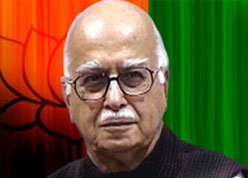
Ahmedabad, BJP’s prime ministerial nominee Lal Krishna Advani and Chief Minister Narendra Modi today exercised their franchise at different booths in the city.

Mr Advani, who turned up along with wife Kamala and daughter Pratibha, cast his vote at Bharadiavas municipal school in Khanpur area in Ahmedabad West (SC) constituency at around 0930 hrs.

Mr Modi exercised his franchise in the city’s Ranip area falling under Gandhinagar constituency, from where Mr Advani is seeking re-election for a fifth time.

Talking to reporters after casting their vote, both Mr Advani and Mr Modi said BJP was poised to emerge as the single largest party.

Noted dancer Mallika Sarabhai, who is contesting as an Independent against Mr Advani and others in Gandhinagar, cast her vote at Nav Gujarat College on Ashram Road.

Gujarat Finance Minister Vajubhai Vala cast his vote at Hariharnagar in Rajkot
Read On

It will be BJP or Congress-led government: Advani

4:58 AM
Bharatiya Janata Party Uluberia (West Bengal), April 29 :  Bharatiya Janata Party prime ministerial candidate L.K. Advani Wednesday said Left parties couldn’t be more mistaken if they believe that the Third Front will ever come to power.
“If communist parties think the Third Front will come to power, then they are wrong. If a government is formed, it will always either be the BJP-led or Congress-led,” Advani said at an election rally here.
Slamming the Congress-led United Progressive Alliance (UPA) government, Advani said they have failed to curb terrorism in the country.
“Threat from the Taliban is just 20 km away from the Indian border but this government is just not capable of fighting terror. There have been so many terrorist attacks in the country over the last five years and hardly any terrorist has been caught,” he said.
Highlighting the BJP’s IT vision, Advani further said: “People today don’t have employment in villages because of which they come to the cities. In the cities too, there are no jobs, and therefore they settle down in slums.”
“With our IT vision, we are going to provide computer education in all villages. According to the Sarva Shiksha Abhiyan, every boy and girl should get education, but this is not enough. Computer education is necessary and we will ensure that everyone gets it, for IT enabled jobs,” he added.
He said the Left Front government in West Bengal was anti-development. “If Tata wanted to get the Nano here, it was good. However the interest of the farmer had to be kept in mind.”
Read On

UPA Report Card: Economy

4:44 AM
Akrita Reyar

THUMBS UP

Record Growth Rates

The Indian economy’s growth has been one of the success stories of the UPA regime. It was for the first time, in post-independence history of country, that our economy registered a spectacular 9% growth rate for three consecutive years (FY 05-08). And even after the global recession set in, while the word braced with contracting markets, defunct companies and pink slips, India remained the second fastest growing economy of the world, with GDP growth rates still over 7%. This has helped bring down poverty levels by about 10%.

The service sector remained the main super star, growing at over 11% and contributing 50%+ of the GDP. Industry came second with about 10% growth rate figures, followed by the agriculture sector.

IT, Real Estate and Communication sectors were the top performers. Besides, the UPA tenure more or less witnessed sustained investment and solid saving, growing from 29.8% to 37.7%.

The government created history again when it came to per capita incomes. At rates of 7.4%, it has been the highest per-capita growth of any four-year period.

Domestic investment rates as a proportion of the GDP increased from 27.6% in FY 04 to 39% in FY 08. The tax to GDP ratio also increased from 9.2% to 12.5%.

Exports grew at an annual average growth rate of 26.4% in USD terms while foreign trade shot up from 23.7% to 35.5%.

Infrastructure

Infrastructure projects have been allotted USD 559 billion in the 11th five year plan. India has a fossil fuel disadvantage compared to China, and the government fought a long and contentious but finally a successful battle to push the Indo-US nuclear deal, thus paving the way for a safer energy future.

FDI limits were relaxed in telecom, civil aviation and construction which brought in competition, spoilt customers for choice and also pushed down prices.

Food Security and Debt Relief

Food security was achieved and record productions of incremental 10 tons each year reaching 230 million tones of grain ensured bulging godowns.

The government also announced a massive Rs 60,000 crore debt relief package for farmers, which enclosed features such as complete waiver of all loans for marginal farmers and small farmers and one-time settlement scheme in respect of other farmers for all loans. This was later revised upwards to Rs 71,860 crore to include a larger number of farmers. About 3.6 crore small and marginal farmers and about a crore other farmers benefited from the scheme.

Being Counted

But above all, the stature of India grew globally owing mostly to its economic performance; and it is a matter of some pride for us that the country contributed more new members to the Forbes Global 2000 than any other in the world in the last four years.

The 5-year UPA term has ended with several of Prime Minister Manmohan Singh’s suggestions incorporated in the G 20 summit in London to find ways to fight recession. India has also been included in two of standard-setting regulatory panels - the Financial Stability Forum and the Basle Committee on Banking.

THUMBS DOWN

Rising Prices

Despite the buoyant performance and record growth rates, the common man was not totally unburdened. Rising prices of food products and oil contributed mainly to his woes.

While it merits mention that the sharp escalation in global crude in 2008 was the main culprit, the fact remains that inflation grew rapidly to touch 11% vis-à-vis the target of 4% set by the RBI. A number of measures unleashed by the government and easing global prices not just reined in the inflation rate, but in fact has pushed it towards deflatory trends, but without easing prices of fruits and vegetables.

The shameful part was that while food stores overflowed, a large part of the poverty stricken population continued to go without food and suicide deaths of farmers in drought stricken areas remained a common phenomenon, as highlighted in Rahul Gandhi’s maiden speech in Parliament, which cited the example of Maharashtra’s Kalavati.

The government did indeed come up with the agricultural debt relief package, but it came a tad too late. Moreover the scheme, which was also dubbed as populist, left a gaping fiscal hole.

Fiscal and Revenue Deficits

The Revenue deficit figure had to be revised to be at Rs 2,41,273 crore i.e. 4.4% of the GDP as against the budgeted figure of Rs 55,184 crore i.e. 1% of GDP. Similarly the fiscal deficit had to be revised upwards to Rs 3,26,515 or 6% of the GDP compared to the target of 2.5% at Rs 1,33,287.

According to a study, India’s public debt is now considered 58% of GDP, which is a major challenge.

Stock Market

The Indian stock market which was in a boom mode, for most of tenure of the government, fell by 40% in just 6 months after touching its peek in January 2008. The bearish trend that followed, partly due a flight of foreign investment, wiped out a lot of feel-good factor and investments. It is only now, in 2009, that the Sensex is beginning to edge upwards again.

Liberalization and SEZs

The government was also forced to go slow on financial liberalization, mainly due to objections of the Left Front, which was one of the main allies of the government for most of its tenure. The government could also only push through reforms related to the insurance, pension and banking sector after the government finally broke away from the Red brigade. The Left had also for most the UPA tenure blocked disinvestment in some public sector firms, which did that allow it the liquidity that it would have liked.

One of the most peculiar dilemmas facing the government was related with the Special Economic Zones. Identified as areas, which are given tax breaks or sops to promote industry and export orientated groups, more than once did the government face rough weather mainly due to land acquisition problems or due to the hypocritical attitude of the Left.

While the Red parties opposed clearance of SEZ project at the Centre, it supported the SEZ projects of West Bengal where its own CPM-led front is in power. The most high profile case in media glare for months was the Nandigram SEZ, where Tata Motors sunk crores to build the people’s car Nano. But concerted opposition by the locals, who were egged on by the Trinamool, eventually led to Ratan Tata pulling out of West Bengal and shifting base to Gujarat.

Besides the Tatas losing a whole lot of money, it gave the government bad publicity and scared away several potential investors.
Read On

Karat asks Chawla to stop DMK bullying in Madurai

4:10 AM
New Delhi, Apr 29 : Communist Party of India-Marxist (CPI-M) general secretary Prakash Karat Wednesday asked Chief Election Commissioner (CEC) Navin Chawla to intervene in the "gross misuse of official machinery" in Tamil Nadu's Madurai Lok Sabha constituency where Chief Minister M. Karunanidhi's son M.K. Azhagiri is contesting.

Tamil Nadu's ruling DMK was adopting "unlawful methods" to solicit votes in the constituency, where the CPI-M has fielded P. Mohan against Azaghiri, Karat alleged in a letter to the CEC.

"The past few weeks have witnessed gross misuse of the official machinery and an unprecedented use of money and goods to lure voters. There have been physical attacks against CPI-M workers including (a legislator)."

He alleged that the district administration had failed to stop such activities by the ruling party and "no effective and serious steps have been taken to stop the malpractices and ensure a free and fair poll".

Asking Chawla to intervene immediately, Karat said the district election officer, the city police commissioner and the public relations officer should be immediately transferred out of their present responsibilities.

"Impartial officers must be assigned to poll duties," Karat said.

Tamil Nadu goes to polls in the last phase of elections May 13.
Read On

We miss Vajpayee, says Arun Jaitley (Interview)

4:04 AM
New Delhi, Apr 29 : A day ahead of the third round of Lok Sabha polls, Bharatiya Janata Party (BJP) leader Arun Jaitley has conceded that his party does miss former prime minister Atal Bihari Vajpayee, the "tallest leader," but said this will have no impact on the final outcome.

"Of course, we miss him. He is the tallest leader," Jaitley told IANS in an interview, quickly adding that it would not have an adverse effect on the final election result. Vajpayee, 86, is out of action because of ill health.

"Every leader has different qualities and strengths, Advaniji has his own, Atalji has his," the 57-year-old key BJP strategist said, when asked if L.K. Advani (81), the party's prime ministerial candidate, would carry the same weight in the elections.

He claimed that the party's assessment after the first two phase of the polls was that "there is a greater possibility of predominance of a non-Congress and anti-Congress grouping after the elections, the nucleus of which will be the BJP".

But where are the allies BJP will need to form a government? "I replied to this. Show me one major state where the Congress is getting a majority."

Jaitley sees a revival of BJP in Uttar Pradesh, where it got only 10 of the 80 seats in 2004, "because of the important Ajit Singh alliance and also better (selection of) candidates".

Enthused by the ghost of the Bofors scandal rearing its head during the elections, he said: "Bofors will surely be an issue now and this will help us. The Congress is in the dock."

But he added: "No, no... it will not supersede our other issues. It will be one of the important issues."

So is Gujarat Chief Minister Narendra Modi prime minister material? Jaitley answered: "There is no confusion anywhere except in the media. It is not we broached it on our own. Someone asked Arun Shourie about Modi, and he said he had the capacity.

"Then, you people (media) asked me, I said I am happy if someone praises Modi; the headline comes next 'Jaitley seconds Shourie'," he laughed.

Is the BJP more focussed on personal attacks on Prime Minister Manmohan Singh rather that speaking of real issues in the campaign?

"I don't agree. Terrorism and economy are the two issues and when we call the prime minister to be weak, this fact emerges from his handling of them," Jaitley said.

He opined that the "political structures in our country are not disciplined enough," when told that the party's issues were not heard as loud as Varun Gandhi's reported inflammatory speeches or the leaders' constant harping on "weak PM".

"This is why sometimes side incidents occupy more media space and you think the issues are not heard. But such incidents don't occupy ground space," Jaitley added.

"I feel", he continued, "there has been a maturing of the Indian electorate which looks at real problems, development. Caste and religion still work, but more on the side."

Is this why terrorism, Amarnath Yatra and the Ram Sethu have a shorter shelf life now?

"Now, you have to put this in perspective. See, terrorism, Amarnath, Ram Sethu still have the capacity to mobilise nationalistic fervour."

And he explained in the same vein that by voter maturity he meant that "irresponsible attacks on a pub or some other place are disliked by most in India. Don't club irresponsible conduct with ideological position".

He denied that the BJP government in Karnataka supported the Sri Ram Sene, the self-styled Hindu moralistic brigade which attacked a pub in Mangalore and beat up women.

"No, we did not. We disowned them completely," he said. And on Varun Gandhi's reported hate speeches, he said: "(Similarly) our position was always clear."
Read On

Advani will not be able to vote for self

3:57 AM

Ahmedabad, April 29: BJP`s prime ministerial candidate L K Advani and his wife will miss out on voting in the Gandhinagar Lok Sabha seat as the couple`s name does not figure in the voter list of the area due to delimitation exercise.

Advani is contesting for fifth consecutive time from the seat.

The Advani couple would, however, be able to cast their vote in municipal school polling booth in Bharadiavas in Shahpur area, which has become part of newly created Ahmedabad West Parliamentary segment post delimitation.

However, Advani can bank on Gujarat Chief Minister Narendra Modi`s vote as the latter`s name figures in the voter list in Ranip, which is in the Gandhinagar Parliamentary constituency.

Ahmedabad (West) is a SC reserved seat where the BJP has fielded Kirit Solanki, who is facing a tough opponent in Shailesh Parmar, Congress candidate and sitting MLA of Shaher Kotda Assembly segment.
Read On

Political parties bank on Bollywood star 'power'

3:28 AM
Mumbai, April 29 : A host of Bollywood celebrities have hit the hot and sultry campaign trail to support political candidates in Mumbai.

Bollywood actress Mahima Chaudhary was a crowd puller at a road show for ationalist Congress Party (NCP) nominee Sanjay Patil in Mumbai's North-East constituency. "All my wishes for Sanjay Patil. I think he is young, energetic and has a family history of serving people. All the people around seem to love him," said Chaudhary.

Chaudhary had been campaigning for a various political parties in the past few weeks in different parts of the country as well.

The state's ruling NCP headed by Sharad Pawar has also roped in Govinda, another popular star, to garner support for its candidate Vasant Davkhare in Thane constituency on the outskirts of Mumbai.

Govinda said that he would campaign for his friends whenever they needed him.

"During a tough phase in my life, Vasant Davkhare stood beside me as a friend. I respect him and his family a lot. I had been to Pune to give support. I am here as well and will be in all the places hopefully," said Govinda.

Earlier, actor-turned-politician Sanjay Dutt , who is now a top functionary of the Samajwadi Party, and senior leader Amar Singh campaigned for Ramchandra R. Patil in Bhiwandi constituency near Mumbai.
Read On

Manmohan Singh promises to tackle recession and terrorism

3:26 AM
Jodhpur, April 29: Prime Minister Manmohan Singh has said that only the Congress Party was equipped to tackle recession and terrorism.

"In this time of economic recession, you need a government who has the experience to tackle with such situations. Because of the UPA Government's policies, recession has not affected India as much as to other countries. Only the Congress Government has the ability and experience to deal with economic recession," Singh said in a rally here on Tuesday.

Dr. Singh further added that coordination was required between all states of the country and other countries to combat terrorism.

"Coordination is required between all the states of our country and between all other countries of the world to deal with terrorism. Support of international diplomacy is also required to deal with various issues related with terrorism. I believe only the Congress Government can deal with all these matters efficiently," Singh added.

The Prime Minister also said that it was the Congress Party that stepped up diplomatic pressure to deal with the perpetrators of last year's Mumbai terror attacks.
Read On

Guards Watch India Polls as Mumbai Attacks Put Terror on Agenda

3:17 AM
By Jay Shankar
Mumbai, April 29-- Kiran Satyaprakash, a Mumbai teacher, has security on her mind, and not just because she will have to show a hologrammed photo-identification card and walk past rows of armed personnel when she votes tomorrow.

“I do not feel safe in my own country and home; I do not sleep when my children are out at night,” said Satyaprakash, 51. “Whichever government comes to power next, they must make a change in our security process, visas, travel and checks.”

Her polling place, in a housing compound for railway officers, is 200 meters (656 feet) from the seaside where 10 Pakistani terrorists came ashore in inflatable dinghies on Nov. 26 in an attack that left 166 dead.
The ease with which the militants besieged luxury hotels, a railway station, a hospital and a Jewish community center over 2 1/2 days has made terrorism the main concern of voters -- and of officials charged with voter-and-candidate protection. The month-long elections are taking place under the tightest safety procedures in India’s six decades of democracy.

The country’s enforcement failings were underscored as Maoist rebels killed 19 people, mostly police and military, during the first round of voting on April 16 and took 500 train passengers hostage on April 22, the eve of the second round.

The rebels are active in a dozen Indian states, straining security services that also have to contend with separatists in the northeast of the country and militants in the disputed Himalayan region of Kashmir who have mounted an armed campaign since 1989.

Automatic Weapons
About 2.1 million security workers, including paramilitary forces armed with automatic weapons, will be deployed in this nation of 1.1 billion people to safeguard voting taking place on five days over a period of a month. The country lacks enough trained manpower for a one-day, nationwide election.

A poll by media company Aaj Tak/India Today Group showed 39 percent of respondents said terrorism was the country’s worst problem, more than twice those who chose the economic slowdown. No dates or number of people questioned were given.

Prime Minister Manmohan Singh’s government scrapped anti- terror laws that allowed suspects to be held for 180 days without charge five years ago, drawing claims from the opposition Bharatiya Janata Party that the ruling Congress party wasn’t doing enough to prevent extremism.

Federal Bureau
Singh, 76, told an election rally in Maharashtra state on April 21 that his government is working to avoid a repeat of the Mumbai attacks while ensuring that no religious group is subject to harassment. Lal Krishna Advani, leader of the Hindu- nationalist BJP, called on April 5 for a judicial inquiry into the government’s handling of the assault.

In the aftermath of the attacks, the BJP ran newspaper advertisements showing blood splattered on a wall and proclaiming “Weak Government.”

The BJP’s campaign platform calls for “zero tolerance” of terrorism, while Congress says its “forceful diplomatic campaign” led Pakistan to admit its citizens were responsible for the Mumbai attacks.

Security for top politicians, including Congress President Sonia Gandhi, her son Rahul Gandhi and Advani, has been stepped up. Additional policemen have been deployed in the towns and villages where they hold rallies, Home Minister Palaniappan Chidambaram said in a televised address on April 2.

The move follows intelligence that the party leaders would be the target of militant attacks during the parliamentary elections that end May 13, the Home Ministry said.

Targeting Rallies?
Militants from Kashmir may send suicide bombers to target campaign rallies, Walter Andersen, a retired U.S. State Department India specialist, said in a telephone interview.

“It is a logical step and there should be an attempt to protect major candidates,” said Andersen, who heads the South Asia Studies Program at Johns Hopkins University’s School for Advanced International Studies in Washington. “The government doesn’t want a prominent politician to be killed.”

Even before voting, candidates campaigned under unprecedented security. At a rally this month, supporters of Advani, 81, sat 60 meters from his podium in Chitradurga, a southern Indian town with no history of terrorism.

Advani’s helicopter flew with commandos from the National Security Guards, the combined police-military force that ended the Mumbai siege, to the 91-percent Hindu town. “It took three days to sanitize the ground,” Deputy Superintendent of Police, C.B. Patil, said at the site. “There are threat perceptions.”


Wooden Barricades
The podium was cordoned off by two chest-high wooden barricades as armed policemen patrolled the no-access zone in- between. About 450 policemen conducted random checks, erected barricades on the streets and frisked BJP supporters. Attendees went through fixed metal detectors and, once inside, were checked again by policemen with hand-held wands. Police and paramilitaries armed with AK-47 rifles ringed the ground.

Former Prime Minister Rajiv Gandhi, husband of Sonia Gandhi, was assassinated by suicide bombers during an election rally in southern Tamil Nadu state’s Sriperumbudur town on May 21, 1991. India blamed the killing on Sri Lanka’s militant group, the Liberation Tigers of Tamil Eelam.

“The security threat in India will be high during the elections,” said Reva Bhalla, South Asia analyst for Austin, Texas-based global intelligence company Stratfor, in an e-mail. Another attack on urban India is “inevitable,” though it is unclear if it would take place during elections when forces will be on high alert, Bhalla said.

The Election Commission, an independent body charged with the conduct of the elections, has set up 828,804 polling stations to elect 543 lawmakers to the Lok Sabha, or lower house of parliament. About 714 million voters are scheduled to elect a government for a five-year term.

In Mumbai, voter Satyaprakash said she was concerned the security rules were relaxed because she had seen people without proper identification entering her residential compound, where voting was to take place.
“They need to learn from their mistakes,” she said.
Read On

Voter turnout in Anantnag would set trend in Valley

3:01 AM
Anantnag (Jammu and Kashmir), Apr 29 : Polling in this Lok Sabha constituency Thursday will indicate which way the wind is blowing - whether people in the Kashmir Valley are willing to defy election boycott calls by Hurriyat separatists and armed guerrillas to come out and vote.

Anantnag is, after all, the first parliamentary constituency in the valley and one of the largest to go to the polls. The south Kashmir constituency is spread over 16 assembly segments in four districts. And the key to success for contestants lies in the voter turnout.

Once heavily infested with separatist guerrillas, Anantnag today is believed to have far fewer militants. But the separatist leaders of both the Hurriyat groups and armed guerrillas have called for a poll boycott this time.

"During assembly elections, the militants did not actively interfere. But this time all the armed groups are issuing a warning. I fear this could affect voter turnout in many places," said a voter.

A total electorate of 1.16 million - made up of 611,958 men and 553,993 women - is eligible to exercise their franchise at 1,485 polling stations across the constituency to elect their representative for the Lok Sabha.

In the December assembly polls, the voter turnout here was 58 percent.

"Local issues dominate assembly polls and this makes people's participation more vigorous than in the Lok Sabha. Generally, we have always seen a lower poll percentage in comparison to assembly elections in our constituency," said Manzoor Ahmed, a voter.

In the assembly battle, the Peoples Democratic Party (PDP) headed by former chief minister Mufti Muhammad Sayeed won 12 of the 16 seats here while the Congress won two. The National Conference and the Communist Party of India-Marxist (CPI-M) bagged a seat each.

This Lok Sabha constituency is a stronghold of the PDP. But undeterred by statistics, the ruling National Conference-Congress alliance has launched an all-out campaign to dislodge the PDP.

Congress general secretary and star campaigner Rahul Gandhi visited Anantnag Monday and urged voters to elect the National Conference nominee Mirza Mehboob Beg.

Though there are 13 candidates in the fray, the main contest is going to be between the National Conference and the PDP.

The PDP has fielded Peer Muhammad Hussain. Both Mufti Sayeed and his daughter, Mehbooba Mufti, have been travelling across the constituency to seek votes for him.

National Conference patron and former chief minister Farooq Abdullah has accused the PDP of doublespeak and of trying to play the emotional card to garner votes.

The PDP has used more or less similar statements, blaming the National Conference for the woes of the people of Kashmir.

Additional police and paramilitary troops have been moved into the four districts of Anantnag, Kulgam, Shopian and Pulwama, which form this Lok Sabha constituency.

The Election Commission has appointed three observers to oversee the smooth and transparent conduct of the poll process.

Jammu and Kashmir has a total of six Lok Sabha seats, of which three are in the Muslim-majority valley.
Read On

First phase polls under high security in West Bengal

2:58 AM
West Bengal, Apr 29 : Left citadel West Bengal holds the first phase of the Lok Sabha polls in 14 of its 42 seats in the northern and Maoist-hit western region Thursday with the ruling Left Front facing a tough challenge from the newly-hitched Congress-Trinamool Congress alliance.

Over 16 million voters will be eligible to choose their nominees in the Lok Sabha from among 134 candidates, with the Congress taking on the Communist Party of India-Marxist (CPI-M) led Left Front, which has has had 32 years of uninterrupted rule in the state, in the bulk of the seats.

West Bengal has been sending the largest contingent of Left MPS over the years. Any dent in the communist strength would affect their efforts to install a Third Front government and lead to an automatic increase in the share of seats of the Congress-led United Progressive Alliance (UPA), of which the Trinamool is also a part now.

The three Maoist-hit districts of Bankura, Midnapore West and Purulia pose the biggest security challenge. The authorities have requisitioned three Indian Air Force (IAF) helicopters for constant air surveillance and shortened polling time by two hours in six pockets most affected by Maoist violence -- Jhargram, Binpur and Bandwan in Midnapore West and Balarampur, Bagmundi and Jaipur in Purulia.

'We have taken sensible precautions so that any Maoist designs can be thwarted,' state Chief Electoral Officer Debashis Sen told IANS.

The Election Commission has also ordered sealing the of West Bengal's borders with Jharkhand, Assam and Bihar to prevent the ultras from sneaking in from the neighbouring states.

Among the prominent leaders in the fray is BJP and former external affairs minister Jaswant Singh, trying his luck from troubled Darjeeling, with support from the Gorkha Janamukti Morcha.

The Morcha is hoping to realise its dreams of a new Gorkhaland state out of parts of northern Bengal with the help of the saffron party, which has been weakened after ties with Mamata Banerjee's Trinamool Congress snapped.

Nine constituencies in six north Bengal districts - Darjeeling, Jalpaiguri, Coochbehar, North Dinajpur, South Dinajpur and Malda - are going to the hustings, and the activities of those demanding new states of Cooch Behar and Kamtapur out of parts of the region are also under the scanner.

Besides Jaswant Singh, other high profile candidates in this phase include Deepa Dasmunsi, the wife of ailing Congress heavyweight Priya Ranjan Dasmunsi who is contesting from his constituency Raiganj against CPI-M's Bireshwar Lahiri and a formidable independent Abdul Karim Chowdhury.

The Left Front has been harping on the need for industrialisation, attacking the Congress and the BJP for failing to take pro-people steps during their reigns at the centre and asking the people to vote it so as to install a Third Front government in Delhi.

The Congress, led by party president Sonia Gandhi and general secretary Rahul Gandhi, has launched scathing attacks on the Left for its alleged inability to ensure basic development in the state.

West Bengal has 42 Lok Sabha seats. While 17 seats go to the polls May 7, the other 11 vote May 13.
Read On

Karunanidhi fit to launch poll campaign : Dr Jaiswal

2:57 AM
Chennai, Apr 29 : Tamil Nadu Chief Minister and DMK president M Karunanidhi, who underwent a spine surgery recently, was recovering well and was declared fit for launching his campaign for the May 13 Lok Sabha polls.

A DMK release said, ortho expert Dr Arvind Jaiswal of All India Insitute of Medical Sciences, who performed the surgery on Mr Karunanidhi at the Sri Ramachandra Medical College Hospital in February, today examined the health condition
of the Chief Minister.

After the examination, he said Mr Karunanidhi was recovering well and his body condition was fit for taking up electioneering.

However, Dr Jaiswal advised Mr Karunanidhi not to undertake frequent long journeys, the release added.

Mr Karunanidhi is scheduled to kick off his poll campaign with a public meeting at Tiruchirapalli on May 1. Considering health conditions, the Chief Minister has restricted his election meetings in just four towns. Apart from Tiruchirapalli, he would address meetings in Madurai, Coimbatore and Chennai on May 5, 8 and 11, respectively. Mr Karunanidhi had on February 11 successfuly underwent ''Lumbar Canal Stenosis'' surgery for his severe backache at SRMC hospital.
Read On

Rahul Gandhi blames BJP for playing divisive politics

2:53 AM
Secretary of India's ruling Congress party Rahul Gandhi on Monday, blamed main opposition Bharatiya Janata Party for playing divisive politics.

Addressing a rally along with chief of Kashmir Omar Abdullah, in Anantnag region of the state, Gandhi said that the BJP plays divisive politics whereas his party plays politics of brotherhood and development.


Choose Bandwidth

Read On

India's BJP activists attack media persons

2:47 AM
IndiaActivists of India's main opposition Bharatiya Janata Party on Monday allegedly attacked media persons and caused damage to their belongings in Ghatlodia area of Gandhinagar.

The parliamentary constituency of the party's prime ministerial candidate Lal Krishna Advani from Gujarat.

The BJP activists were angry over India's apex court's directive to probe into role of Narendra Modi and others in post-Godhra communal riots.


Fast Rewind Stop Play Pause Fast Forward Mute/Unmute Volume ControlVolume ControlVolume ControlVolume ControlVolume Control Fullscreen Full Screen

Choose Bandwidth
Read On

My Blog List


PolitiClone Comments

Recent Posts

PolitiClone

Blog Archive

Visitors